

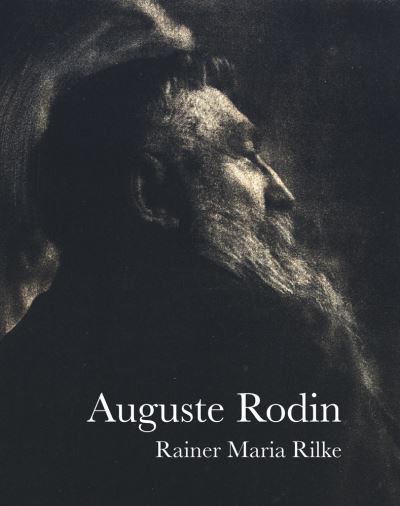
Auguste Rodin (1840-1917) was already an old man when the young poet Rainer Maria Rilke went to interview him for the first time. Rilke stayed on to work as Rodin's secretary. Intensely sensitive to art, and in particular to the irreducible power of objects, and yet able to express this awareness in prose of great lyricism and clarity, Rilke was destined to be the critic who would most naturally dramatise Rodin's work. In 1903, Rilke published his essay Rodin, a sustained and profound meditation on the unique power of Rodin's sculpture that has never been equalled. Written around a chronology of Rodin's work, it is also a very approachable introduction to some of the greatest sculpture of the 19th century. Rainer Maria Rilke's essay on Rodin went on to achieve great fame in Germany, selling many tens of thousands of copies during his lifetime. An introduction by Dr Alexandra puts this important work in the context of Rodin's sculpture and his connections with Rilke and his translator Jessie Lemont. It assesses as well the value that Rilke's appreciation of Rodin has today.
| ISBN: | 9781843682301 |
| Publication date: | 13th November 2023 |
| Author: | Rainer Maria Rilke |
| Publisher: | Pallas Athene |
| Format: | Paperback |
| Pagination: | 128 pages |
| Series: | Pallas Athene |
| Genres: |
Individual artists, art monographs |
Auguste Rodin (1840-1917) was already an old man when the young poet Rainer Maria Rilke went to interview him for the first time. Rilke stayed on to work as Rodin's secretary.
Auguste Rodin features in the following genres: Individual artists, art monographs
Paperback, Ebook. Not Available.
Auguste Rodin was written by Rainer Maria Rilke and published by Pallas Athene
Auguste Rodin has 128 pages
Yes it is part of Pallas Athene series