

'It is inspirational.' - Helen Fry, author of Women in Intelligence
'An important and exciting contribution to the history.' - Clare Mulley, author of Agent Zo
Bletchley Park is remembered as a land of male intellectuals who were supported by a staff of women in menial roles, with figures such as Alan Turing, William Tutte and John Tiltman taking centre stage. These are the men who worked on the fearsome Enigma and Lorenz ciphering systems - the men who helped sway the course of the war in the Allies' favour.
But, as is often the case in the historical record, this is not the whole story. Women were not just secretaries and assistants: they had serious full-on codebreaking roles. And this was not just at Bletchley, or in the UK, or even only in the Second World War. These were women like Margaret Rock, who solved Enigma and other machine problems; Agnes Driscoll, the first US Navy codebreaker; and Asta Friedrichs, who postwar became a prime source for information on German Foreign Office codebreaking.
Yet, when the histories were written, these women - and many more besides - somehow got left out.
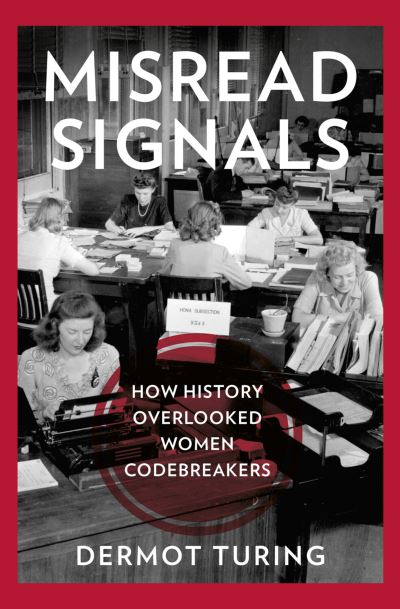
Who were they? What did they achieve? How did they 'vanish'? In Misread Signals, expert codebreaking historian Dermot Turing turns his attention to these long-ignored women and puts their contributions back in the spotlight where they belong.
| ISBN: | 9781803997933 |
| Publication date: | 21st August 2025 |
| Author: | Dermot Turing |
| Publisher: | The History Press |
| Format: | Hardback |
| Pagination: | 256 pages |
| Genres: |
Espionage and secret services Gender studies: women and girls Second World War Social and cultural history Biography: science, technology and medicine Collected biographies History of Computing, digital and information technologies |
'It is inspirational.' - Helen Fry, author of Women in Intelligence'An important and exciting contribution to the history.' - Clare Mulley, author of Agent ZoBletchley Park is remembered as a land of male intellectuals who were supported by a staff of women in menial roles, with figures such as Alan Turing, William Tutte and John Tiltman taking centre stage. These are the men who worked on the fearsome Enigma and Lorenz ciphering systems - the men who helped sway the course of the war in the Allies' favour.But, as is often the case in the historical record, this is not the whole story.
Misread Signals features in the following genres: Espionage and secret services, Gender studies: women and girls, Second World War, Social and cultural history, Biography: science, technology and medicine, Collected biographies, History of Computing, digital and information technologies
Hardback. £19.80, down from the £22.00 cover price. In Stock.
Misread Signals was written by Dermot Turing and published by The History Press
Misread Signals has 256 pages
£19.80, reduced from £22.00. In Stock.