

&«This relevant, clearly defined study isn't constricted by its primary focus on late nineteenth-century American utopias, written when inequality flourished. Morris enriches this focus with chronological comparisons to well-known and lesser-known American utopias in other periods; international contexts from non-American authors; and interpretive perspectives by utopian specialists, political scientists, philosophers, and sociologists. But the book's most striking quality is the variety of reforms identified and discussed. This variety greatly enhances our understanding of utopists' war on inequality.»
(Kenneth M. Roemer, Emeritus Fellow, University of Texas System Academy of Distinguished Teachers. Author of The Obsolete Necessity, Utopian Audiences, and (ed.) America as Utopia
&«Utopian alternatives to current, persistent and increasing inequality matter: as William Blake said, 'What is now proved was once, only imagin'd', and so Donald Morris examines a wealth of possibilities, some outlandish, but all conceivable, and many eminently feasible, from a tradition of literary and imaginative forms of political and social theory. A hopeful and invigorating read.»
(Tom Boland, Senior Lecturer in Sociology, University College Cork)
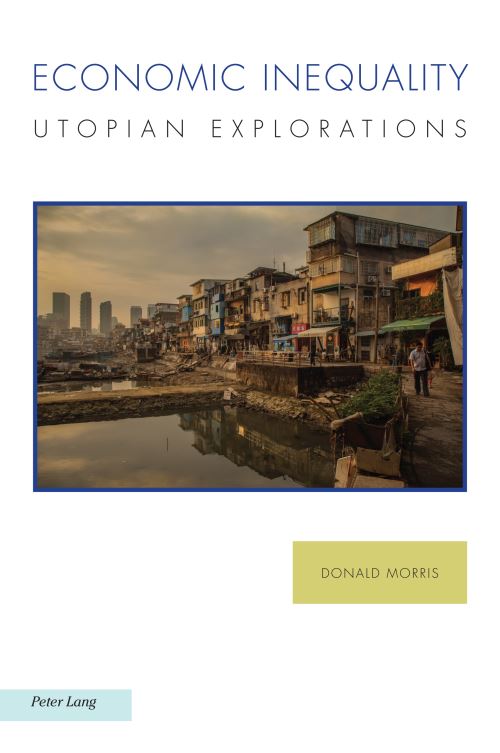
This work explores what utopian writers have said about economic inequality. Its transdisciplinary focus is literary utopias-novels of social theory-by authors seeking solutions to the problems of economic inequality. The work challenges our moral assumptions about economic inequality-its potential for resolution-or its inevitability and the ultimate bifurcation of society.
It is not an economic treatise but an exploration in social philosophy in its utopian expressions. Economic inequality sets arbitrary limits on whose contributions will benefit society, thereby squandering talent, limiting opportunities, and stifling competition-capriciously restricting the pool of competitors-by class or gender or race.
As utopian writers envision a future where the extremes of poverty and wealth have been tempered, it is instructive to explore the instruments they employ; by what measures have they defeated poverty or diminished the threats boundless fortunes pose, thereby revitalizing society?
| ISBN: | 9781803741765 |
| Publication date: | 25th April 2024 |
| Author: | Donald Morris |
| Publisher: | Peter Lang an imprint of Peter Lang Ltd, International Academic Publishers |
| Format: | Paperback |
| Pagination: | 256 pages |
| Series: | Ralahine Utopian Studies |
| Genres: |
Literature: history and criticism Public finance and taxation Social and political philosophy Sociology Political science and theory |
&«This relevant, clearly defined study isn't constricted by its primary focus on late nineteenth-century American utopias, written when inequality flourished. Morris enriches this focus with chronological comparisons to well-known and lesser-known American utopias in other periods; international contexts from non-American authors; and interpretive perspectives by utopian specialists, political scientists, philosophers, and sociologists.
Economic Inequality features in the following genres: Literature: history and criticism, Public finance and taxation, Social and political philosophy, Sociology, Political science and theory
Paperback. Not Available.
Economic Inequality was written by Donald Morris and published by Peter Lang an imprint of Peter Lang Ltd, International Academic Publishers
Economic Inequality has 256 pages
Yes it is part of Ralahine Utopian Studies series