

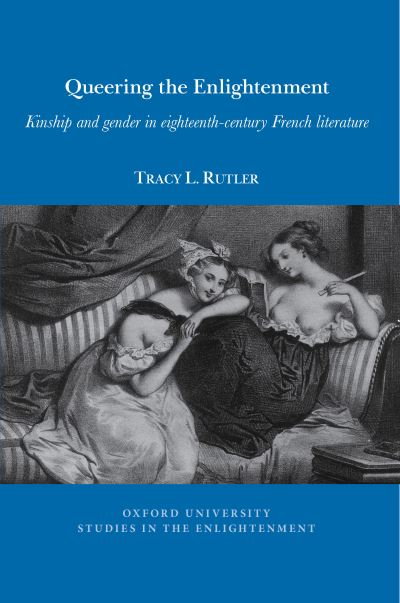
Liminal periods in politics often serve as points in time when traditional methods and principles organizing society are disrupted. These periods of interregnum may not always result in complete social upheaval, but they do open the space to imagine social and political change in diverse forms. In Queering the Enlightenment: kinship and gender in the literature of eighteenth-century France, Tracy Rutler uncovers how numerous canonical authors of the 1730s and 40s were imagining radically different ways of organizing the masses during the early years of Louis XV's reign. Through studies of the literature of Antoine François Prévost, Claude Crébillon, Pierre de Marivaux, and Françoise de Graffigny among others, Rutler demonstrates how the heteronormative bourgeois family's rise to dominance in late-eighteenth-century France had long been contested within the fictional worlds of many French authors. The utopian impulses guiding the fiction studied in this book distinguish these authors as some of the most brilliant political theorists of the day. Enlightenment, for these authors, means reorienting one's relation to power by reorganizing their most intimate relations. Using a practice of reading queerly, Rutler shows how these works illuminate the unparalleled potential of queer forms of kinship to dismantle the patriarchy and help us imagine what might eventually take its place.
| ISBN: | 9781800859807 |
| Publication date: | 8th November 2021 |
| Author: | Tracy Rutler |
| Publisher: | Voltaire Foundation an imprint of Liverpool University Press |
| Format: | Paperback |
| Pagination: | 304 pages |
| Series: | Oxford University Studies in the Enlightenment |
| Genres: |
Literary studies: c 1600 to c 1800 Feminism and feminist theory |
Liminal periods in politics often serve as points in time when traditional methods and principles organizing society are disrupted. These periods of interregnum may not always result in complete social upheaval, but they do open the space to imagine social and political change in diverse forms.
Queering the Enlightenment features in the following genres: Literary studies: c 1600 to c 1800, Feminism and feminist theory
Paperback. Not Available.
Queering the Enlightenment was written by Tracy Rutler and published by Voltaire Foundation an imprint of Liverpool University Press
Queering the Enlightenment has 304 pages
Yes it is part of Oxford University Studies in the Enlightenment series