

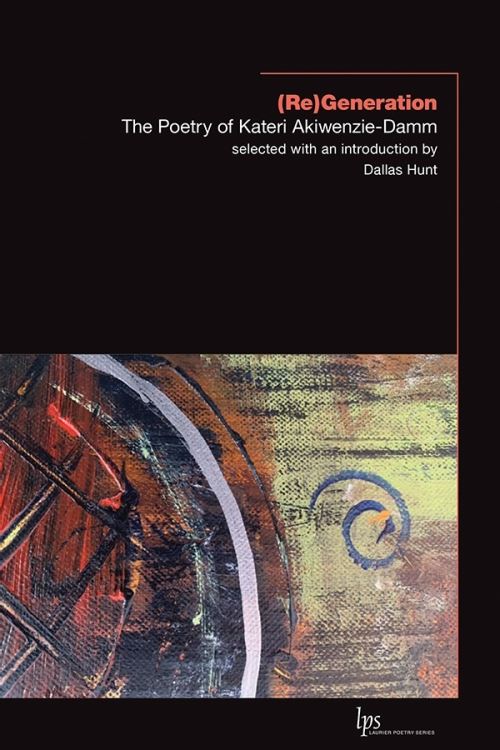
(Re)Generation contains selected poetry by Anishinaabe writer Kateri Akiwenzie-Damm that deals with a range of issues: from violence against Indigenous women and lands to Indigenous erotica and the joyous intimate encounters between bodies. Kateri Akiwenzie-Damm's influence on the field of Indigenous literature cannot be understated. Her creative work is formative, and she is responsible for the release of other influential works in the field of Indigenous literary studies through her publishing house, Kegedonce Press.
Akiwenzie-Damm is proof positive that if Indigenous peoples are going to resist the violent processes of ongoing colonialism, then they're going to have to do it together. Akiwenzie-Damms's afterword speaks to the relations and obligations Indigenous peoples have to one another and their other-than-human kin, as she reflects on the resilient work that Indigenous creative work has done and continues to do in spite of colonial violence.
Her afterword stakes a claim for the necessity of poetry in the face of ongoing colonialism, not only in the present but in the future and for the generations to come. The introduction by Dallas Hunt locates Akiwenzie-Damm within the field of Indigenous literature and meditates on her influence on the field of Indigenous erotica. Akiwenzie-Damm writes in service of Indigenous love, intimacy, and joy, and speaks with an unwavering voice, one that, to paraphrase Akiwenzie-Damm herself, 'shakes the earth'.
| ISBN: | 9781771124713 |
| Publication date: | 31st August 2021 |
| Author: | Kateri AkiwenzieDamm |
| Publisher: | Wilfrid Laurier University Press |
| Format: | Paperback |
| Pagination: | 94 pages |
| Series: | Laurier Poetry |
| Genres: |
Poetry by individual poets Indigenous peoples |
(Re)Generation contains selected poetry by Anishinaabe writer Kateri Akiwenzie-Damm that deals with a range of issues: from violence against Indigenous women and lands to Indigenous erotica and the joyous intimate encounters between bodies. Kateri Akiwenzie-Damm's influence on the field of Indigenous literature cannot be understated.
(Re)Generation features in the following genres: Poetry by individual poets, Indigenous peoples
Paperback. £16.19, down from the £17.99 cover price. Not Available.
(Re)Generation was written by Kateri AkiwenzieDamm and published by Wilfrid Laurier University Press
(Re)Generation has 94 pages
Yes it is part of Laurier Poetry series
£16.19, reduced from £17.99. Not Available.