

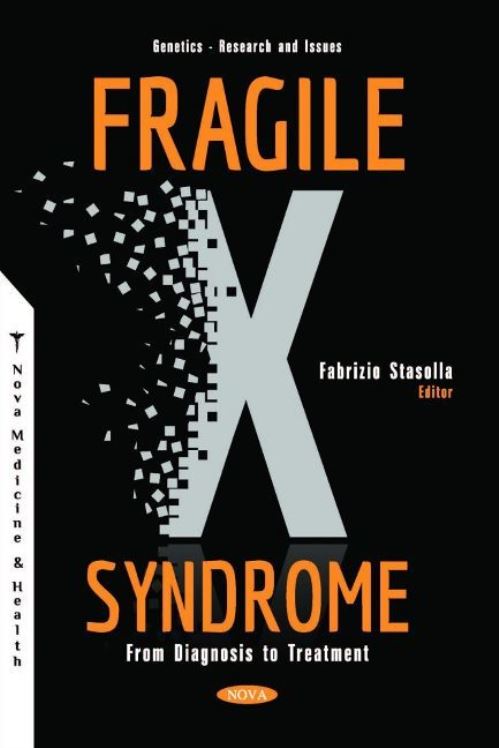
Fragile X syndrome is an inherited disease caused by an excessive length of the FMR protein due to mutations in the FMR1 gene located on the X chromosome. It is commonly described as one of the most common genetic diseases with autism-like behaviours and related developmental disabilities. Beside intellectual delays, behavioural problems, and communication difficulties, mood disorders usually occur.
Diagnosis is based on laboratory tests and DNA results. Phenotypes including long and narrow face, large ears, hyper-arched palate, flat feet, ataxia, seizures, anxiety, aggression, and hand-related stereotypic behaviours are frequently observed. Although there is no specific cure, early interventions are highly encouraging, promising, and recommended.
Pharmacological treatments may be combined with behavioural and/or cognitive behavioural interventions. Recently, assistive technology-based programs have been implemented. This volume includes seven chapters and addresses the newest advances in the diagnosis and treatment of individuals with Fragile X syndrome.
Chapter One encompasses the molecular features and pathological bases of the disease. A comprehensive literature overview was conducted. The role of the FMR protein was emphasized although few studies evaluated its function.
Chapter Two deals with the neuropsychiatric symptoms related to the syndrome. A complete conceptual framework was exhaustively detailed. Chapter Three emphasizes the role of pharmacotherapy in the treatment of Fragile X syndrome.
A further literature review was carried out. Clinical relevance was outlined. Chapter Four provides the reader with a conceptual analysis.
Besides molecular features, brain development was described. Challenging behaviours were included and the importance of the early combined intervention was critically discussed. Chapters Five, Six, and Seven detailed three case reports on the effectiveness and the suitability of assistive technology-based interventions.
Specifically, Chapter Five argued for microswitch-cluster technology focused on pursuing the dual simultaneous goal of promoting an adaptive response (i.e., object manipulation) and reducing a challenging behaviour (i.e., hand mouthing). Chapter Six describes a combined microswitch and VOCA program useful to ensure the participant has the choice between independent access to positive stimulation and asking for social interaction.
Finally, Chapter Seven includes choice opportunities through an assistive technology-mediated program involving a boy with Fragile X in a functional task. Targeted readers (i.e., caregivers, clinicians, speech therapists, professionals, psychologists, neurologists, parents of children with Fragile X syndrome, teachers) may find interesting and stimulating tips and insights for daily use in clinical research and practice, with the dual objective of diagnosis and treatment.
| ISBN: | 9781685075729 |
| Publication date: | 8th February 2022 |
| Author: | Fabrizio Stasolla |
| Publisher: | Nova Science Publishers an imprint of Nova Science Publishers, Inc |
| Format: | Paperback |
| Pagination: | 179 pages |
| Series: | Genetics. Research and Issues |
| Genres: |
Medical genetics |
Fragile X syndrome is an inherited disease caused by an excessive length of the FMR protein due to mutations in the FMR1 gene located on the X chromosome. It is commonly described as one of the most common genetic diseases with autism-like behaviours and related developmental disabilities.
Fragile X Syndrome features in the following genres: Medical genetics
Paperback. Not Available.
Fragile X Syndrome was written by Fabrizio Stasolla and published by Nova Science Publishers an imprint of Nova Science Publishers, Inc
Fragile X Syndrome has 179 pages
Yes it is part of Genetics. Research and Issues series