

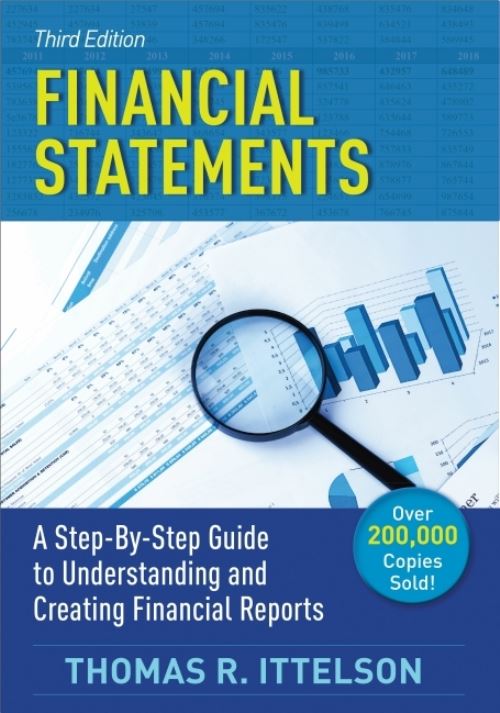
Ittelson is an expert at explaining complicated financial topics in an accessible way to non-financial audiences. In this book, he empowers readers by clearly and simply demonstrating how the three major accounting statements interact to offer a snapshot of a company's financial health. This book teaches readers how to use specialised accounting vocabulary and makes accessible the structure and purpose of the three major numeric statements that describe a company's financial condition.
Each statement paints a different and essential picture - the "three-legged stool" of company reporting: · The profit and loss statement shows the manufacturing (or service offerings) and selling actions of the company that result in profit or loss during a period. It gives a very important perspective on the company's performance, its profitability. · The cash flow statement details cash into and out of the company for a period.
You need money to make money. Running out of cash is not good. · The balance sheet records at the end of a period, an instant in time, what the company owns and what it owes, including the owners' stake, called shareholders' equity. With two new major topic sections (charity accounting and pricing theory for profitability) and spot colour reformatting to improve comprehension, this third edition of FINANCIAL STATEMENTS is simply the clearest and most comprehensive introduction to financial reporting available.
No accounting background is required.
| ISBN: | 9781632651754 |
| Publication date: | 26th May 2020 |
| Author: | Thomas R Ittelson |
| Publisher: | Career Press an imprint of RED WHEEL/WEISER |
| Format: | Paperback |
| Pagination: | 320 pages |
| Genres: |
Financial reporting, financial statements |
Ittelson is an expert at explaining complicated financial topics in an accessible way to non-financial audiences. In this book, he empowers readers by clearly and simply demonstrating how the three major accounting statements interact to offer a snapshot of a company's financial health.
Financial Statements features in the following genres: Financial reporting, financial statements
Paperback. Not Available.
Financial Statements was written by Thomas R Ittelson and published by Career Press an imprint of RED WHEEL/WEISER
Financial Statements has 320 pages