

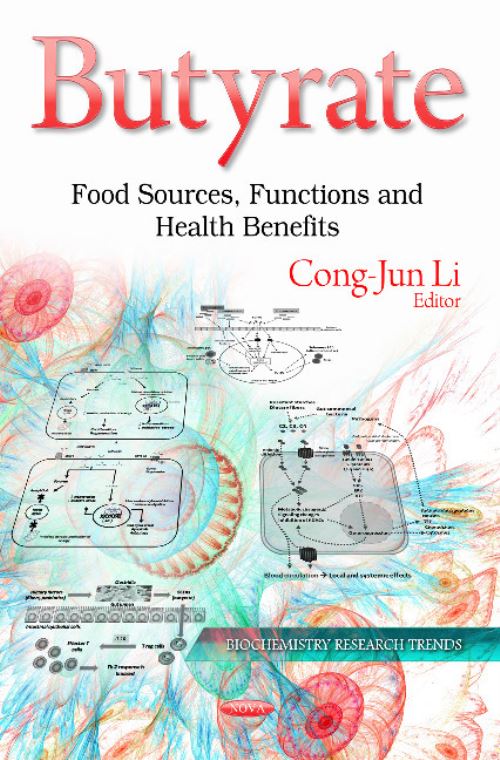
This is the first book specifically devoted to butyrate and its biological functions in the health of humans and animals. It is the result of the collective efforts of a group of international experts working on different aspects of butyrate. It has been recognised for a long time that the consumption of dietary fibres has positive metabolic health effects.
These effects are directly associated with short-chain fatty acids (SCFAs), particularly butyrate, formed by the microbial degradation of dietary fibres in the digestive tract. Butyrate-induced biological effects provide examples of epigenomic regulation induced by nutrient elements and provide a basis for understanding the full range of the biological roles and molecular mechanisms that butyrate may play in cell growth, proliferation and energy metabolism.
This book is a comprehensive collection of highly innovative research ideas, strategies, and crucial points related to butyrate and its biological functions. With a detailed introduction of recent advances in different but intriguing research fields, this book is a great reference for biochemists, molecular biologists, biomedical scientists and clinical researchers. This book is also a great reference for graduate students working in the related fields of biomedical sciences.
| ISBN: | 9781631176579 |
| Publication date: | 1st June 2014 |
| Author: | CongJun Li |
| Publisher: | Nova Science Publishers an imprint of Nova Science Publishers, Inc |
| Format: | Hardback |
| Pagination: | 331 pages |
| Series: | Biochemistry Research Trends |
| Genres: |
Biochemistry |
This is the first book specifically devoted to butyrate and its biological functions in the health of humans and animals. It is the result of the collective efforts of a group of international experts working on different aspects of butyrate.
Butyrate features in the following genres: Biochemistry
Hardback. Not Available.
Butyrate was written by CongJun Li and published by Nova Science Publishers an imprint of Nova Science Publishers, Inc
Butyrate has 331 pages
Yes it is part of Biochemistry Research Trends series