

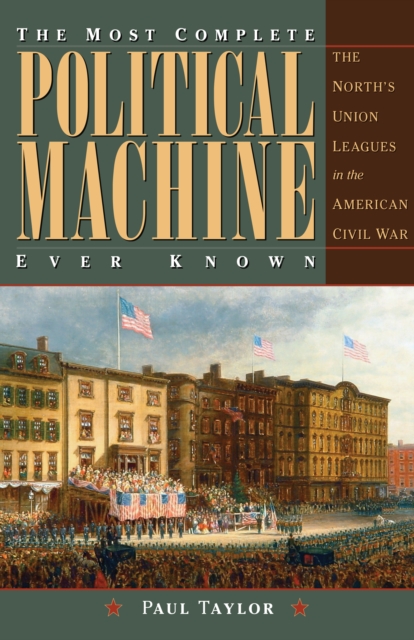
The martial enthusiasm that engulfed the North when the American Civil War commenced in April 1861 vanished by the following summer. Repeated military defeats, economic worries, and staggering casualties prompted many civilians to question the war's viability. Frustration exploded into anger when Republican president Abraham Lincoln issued his preliminary Emancipation Proclamation in September.The disgruntled voices grew louder.
These anti-Lincoln Democrats, nicknamed "e;Copperheads,"e; viewed blacks with disdain and considered many of Lincoln's legal decisions to be unconstitutional. Civilian disenchantment led to significant Republican defeats in the November Congressional elections. As 1862 ended, Northern morale was at rock bot- tom.
Across the North, ardent pro-Lincoln men realized their country needed a patriotic stimulus, as well as an organized means of countering what they viewed as their Copperhead adversaries' treasonous pronouncements and subversion. These men formed what became known as Union Leagues:
| ISBN: | 9781631013355 |
| Publication date: | 8th May 2018 |
| Author: | Taylor, Paul |
| Publisher: | The Kent State University Press |
| Format: | Ebook |
The martial enthusiasm that engulfed the North when the American Civil War commenced in April 1861 vanished by the following summer. Repeated military defeats, economic worries, and staggering casualties prompted many civilians to question the war's viability.
Ebook. £51.59. Digital. Available Immediately. Country restrictions apply..
Most Complete Political Machine Ever Known was written by Taylor, Paul and published by The Kent State University Press
£51.59. Digital. Available Immediately. Country restrictions apply..