

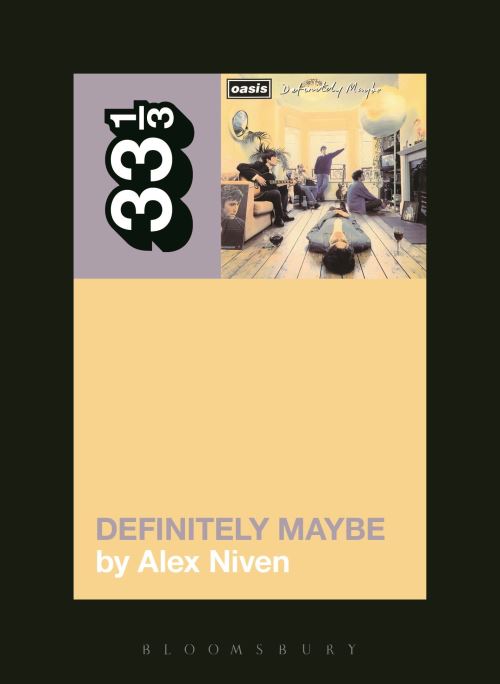
A brilliant study of Oasis' debut album, highlighting the band's massive cultural impact and the raw, positive power of those early songs.
Oasis's incendiary 1994 debut album Definitely Maybe managed to summarize almost the entire history of post-fifties guitar music from Chuck Berry to My Bloody Valentine in a way that seemed effortless. But this remarkable album was also a social document that came closer to narrating the collective hopes and dreams of a people than any other record of the last quarter century.
In a Britain that had just undergone the most damaging period of social upheaval in a century under the Thatcher government, Noel Gallagher ventriloquized slogans of burning communitarian optimism through the mouth of his brother Liam and the playing of the other Oasis 'everymen': Paul McGuigan, Paul Arthurs and Tony McCarroll. On Definitely Maybe, Oasis communicated a timeworn message of idealism and hope against the odds, but one that had special resonance in a society where the widening gap between high and low demanded a newly superhuman kind of leaping.
Alex Niven charts the astonishing rise of Oasis in the mid 1990s and celebrates the life-affirming, communal force of songs such as "Live Forever," "Supersonic," and "Cigarettes & Alcohol." In doing so, he seeks to reposition Oasis in relation to their Britpop peers and explore one of the most controversial pop-cultural narratives of the last thirty years.
| ISBN: | 9781623564230 |
| Publication date: | 3rd July 2014 |
| Author: | Alex Niven |
| Publisher: | Bloomsbury Academic an imprint of Bloomsbury Publishing (UK) |
| Format: | Paperback |
| Pagination: | 144 pages |
| Series: | 33 1/3 |
| Genres: |
Popular music Musicians, singers, bands and groups Theory of music and musicology |
A brilliant study of Oasis' debut album, highlighting the band's massive cultural impact and the raw, positive power of those early songs.Oasis's incendiary 1994 debut album Definitely Maybe managed to summarize almost the entire history of post-fifties guitar music from Chuck Berry to My Bloody Valentine in a way that seemed effortless. But this remarkable album was also a social document that came closer to narrating the collective hopes and dreams of a people than any other record of the last quarter century.
Definitely Maybe features in the following genres: Popular music, Musicians, singers, bands and groups, Theory of music and musicology
Paperback. £8.99, down from the £9.99 cover price. Not Available.
Definitely Maybe was written by Alex Niven and published by Bloomsbury Academic an imprint of Bloomsbury Publishing (UK)
Definitely Maybe has 144 pages
Yes it is part of 33 1/3 series
£8.99, reduced from £9.99. Not Available.