

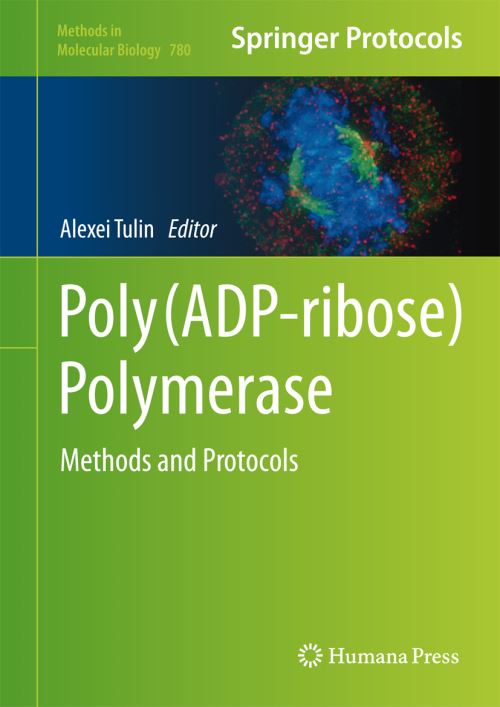
Poly (ADP-ribose) Polymerases (PARPs) are abundant and ubiquitous proteins that regulate crucial processes of the cell cycle, DNA repair, genomic stability, and transcriptional regulation. Being involved in basic cell functions, PARPs mediate rapid responses to such environmental factors as stress, infection, nutrition and hormonal signals. Whereas PARP inhibitors can suppress tumor growth and proliferation in certain breast, ovarian, and prostate cancers, understanding how PARP controls cellular functions is essential for the development of novel cancer treatments strategies. Divided into three convenient sections, Poly(ADP-Ribose) Polymerase: Methods and Protocols aims to explain how PARP proteins act within the normal development of an organism as well as in pathogenic conditions, seeks to advance the knowledge of developmental pathways regulation, and endeavors to facilitate the development of new therapeutic drugs and methods to target PARP-dependent processes. Written in the highly successful Methods in Molecular Biology™ series format, chapters contain introductions to their respective topics, lists of the necessary materials and reagents, step-by-step, readily reproducible laboratory protocols, and notes on troubleshooting and avoiding known pitfalls.
Authoritative and accessible, Poly(ADP-Ribose) Polymerase: Methods and Protocols serves as an ideal guide to scientists who wish to continue exploring this exciting and progressive research field.
| ISBN: | 9781617792694 |
| Publication date: | 31st August 2011 |
| Author: | Alexei V Tulin |
| Publisher: | Humana Press |
| Format: | Hardback |
| Pagination: | 521 pages |
| Series: | Methods in Molecular Biology |
| Genres: |
Cellular biology (cytology) Biochemistry |
Poly (ADP-ribose) Polymerases (PARPs) are abundant and ubiquitous proteins that regulate crucial processes of the cell cycle, DNA repair, genomic stability, and transcriptional regulation. Being involved in basic cell functions, PARPs mediate rapid responses to such environmental factors as stress, infection, nutrition and hormonal signals. Whereas PARP inhibitors can suppress tumor growth and proliferation in certain breast, ovarian, and prostate cancers, understanding how PARP controls cellular functions is essential for the development of novel cancer treatments strategies.
Poly (ADP-Ribose) Polymerase features in the following genres: Cellular biology (cytology), Biochemistry
Hardback. Not Available.
Poly (ADP-Ribose) Polymerase was written by Alexei V Tulin and published by Humana Press
Poly (ADP-Ribose) Polymerase has 521 pages
Yes it is part of Methods in Molecular Biology series