

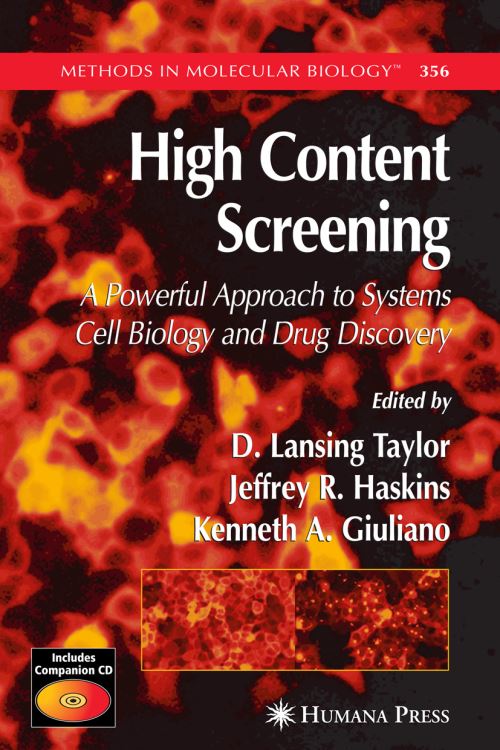
There has always been some tension between proponents of hypothesis-driven and discovery-driven research in the broad field of life sciences. Academic research has been primarily focused on hypothesis-driven research. However, the success of the human genome project, a discovery-driven research approach, has opened the door to adding other types of discovery-driven research to a continuum of research approaches.
In contrast, drug discovery research in the pharmaceutical industry has embraced discovery-driven research for many years. A good example has been the discovery of active compounds from large chemical libraries, through screening campaigns. The success of the human genome project has also demonstrated the need for both academic researchers and industrial researchers to now understand the functions of genes and gene products.
The cell is the basic unit of life and it has been at the cellular level where function can be demonstrated most cost-effectively and rapidly. High content screening (HCS) was developed by Cellomics Inc. in the mid-1990s to address the need for a platform that could be used in the discovery-driven research and development required to understand the functions of genes and gene products at the level of the cell.
| ISBN: | 9781617377464 |
| Publication date: | 10th December 2010 |
| Author: | D Lansing Taylor |
| Publisher: | Humana Press |
| Format: | Paperback |
| Pagination: | 464 pages |
| Series: | Methods in Molecular Biology |
| Genres: |
Cellular biology (cytology) Medicinal chemistry |
There has always been some tension between proponents of hypothesis-driven and discovery-driven research in the broad field of life sciences. Academic research has been primarily focused on hypothesis-driven research.
High Content Screening features in the following genres: Cellular biology (cytology), Medicinal chemistry
Paperback. Not Available.
High Content Screening was written by D Lansing Taylor and published by Humana Press
High Content Screening has 464 pages
Yes it is part of Methods in Molecular Biology series