

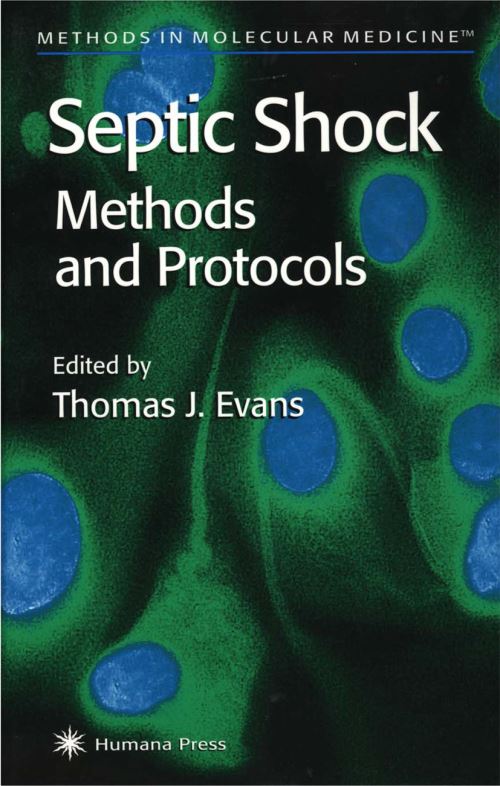
Septic shock remains a serious medical condition with high mortality. Despite many advances in intensive care medicine and antibiotic devel- ment, this has not changed appreciably in the last 20 years. Frustratingly, over the same period of time, enormous advances have been made in understa- ing the underlying pathogenic mechanisms of this condition.
This has resulted in the development of several novel therapies for septic shock, which, despite excellent theoretical grounds for their efficacy, have failed in altering mort- ity attributable to sepsis. The reasons for these failures are multiple, but it is clear that further research is required aimed at increasing our understanding of the basic pat- physiological processes that occur following infection. Research into septic shock draws upon a number of different disciplines, ranging from molecular and cellular biology to physiological measurements on whole animals.
Septic Shock Methods and Protocols is an attempt to draw together into one volume a number of protocols that are of use in the investigation of the mechanisms of septic shock. I have divided the book into five sections. The first deals with endotoxin, the lipopolysaccharide component of the Gram-negative cell m- brane that can mimic many of the features of septic shock.
Gram-positive organisms are found increasingly as causes of septic shock, and several - pects of toxins produced from these bacteria are considered in the second s- tion.
| ISBN: | 9781617371547 |
| Publication date: | 9th November 2010 |
| Author: | Thomas J Evans |
| Publisher: | Humana Press |
| Format: | Paperback |
| Pagination: | 208 pages |
| Series: | Methods in Molecular Medicine |
| Genres: |
Diseases and disorders |
Septic shock remains a serious medical condition with high mortality. Despite many advances in intensive care medicine and antibiotic devel- ment, this has not changed appreciably in the last 20 years.
Septic Shock Methods and Protocols features in the following genres: Diseases and disorders
Paperback, Hardback. Not Available.
Septic Shock Methods and Protocols was written by Thomas J Evans and published by Humana Press
Septic Shock Methods and Protocols has 208 pages
Yes it is part of Methods in Molecular Medicine series