

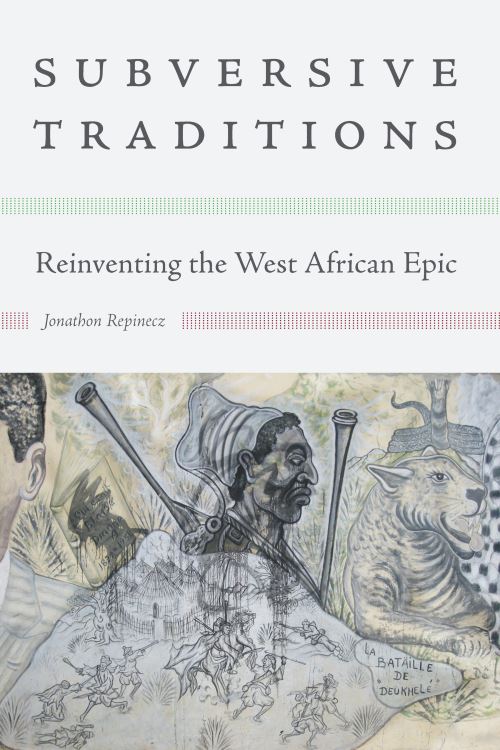
How can traditions be subversive? The kinship between African traditions and novels has been under debate for the better part of a century, but the conversation has stagnated because of a slowness to question the terms on which it is based: orality vs. writing, tradition vs. modernity, epic vs. novel. These rigid binaries were, in fact, invented by colonialism and cemented by postcolonial identity politics. Thanks to this entrenched paradigm, far too much ink has been poured into the so-called Great Divide between oral and writing societies, and to the long-lamented decline of the ways of old. Given advances in social science and humanities research-studies in folklore, performance, invented traditions, colonial and postcolonial ethnography, history, and pop culture-the moment is right to rewrite this calcified literary history. This book is not another story of subverted traditions, but of subversive ones. West African epics like Sunjata, Samori, and Lat-Dior offer a space from which to think about, and criticize, the issues of today, just as novels in European languages do. Through readings of documented performances and major writers like Yambo Ouologuem and Amadou Hampâté Bâ of Mali, Ahmadou Kourouma of Ivory Coast, and Aminata Sow Fall and Boubacar Boris Diop of Senegal, this book conducts an entirely new analysis of West African oral epic and its relevance to contemporary world literature.
| ISBN: | 9781611863345 |
| Publication date: | 30th October 2019 |
| Author: | Jonathon Repinecz |
| Publisher: | Michigan State University Press |
| Format: | Paperback |
| Pagination: | 328 pages |
| Series: | African Humanities and the Arts |
| Genres: |
Literature: history and criticism Literary studies: c 1900 to c 2000 Literary studies: general |
How can traditions be subversive? The kinship between African traditions and novels has been under debate for the better part of a century, but the conversation has stagnated because of a slowness to question the terms on which it is based: orality vs. writing, tradition vs. modernity, epic vs. novel.
Subversive Traditions features in the following genres: Literature: history and criticism, Literary studies: c 1900 to c 2000, Literary studies: general
Paperback. £22.50, down from the £25.00 cover price. Not Available.
Subversive Traditions was written by Jonathon Repinecz and published by Michigan State University Press
Subversive Traditions has 328 pages
Yes it is part of African Humanities and the Arts series
£22.50, reduced from £25.00. Not Available.