

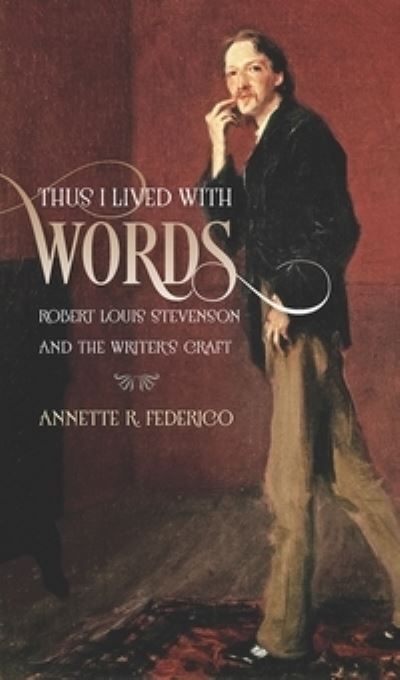
Robert Louis Stevenson (1850-1894) loved more than anything to talk about the craft of writing and the pleasure of reading good books. His dedication to the creative impulse manifests itself in the extraordinary amount of work he produced in virtually every literary genre-fiction, poetry, travel writing, and essays-in a short and peripatetic life. His letters, especially, confess his elation at the richness of words and the companionship of books, often projected against ill health and the shadow of his own mortality.
Stevenson belonged to a newly commercial literary world, an era of mass readership, marketing, and celebrity. He had plenty of practical advice for writers who wanted to enter the profession: study the best authors, aim for simplicity, strike a keynote, work on your style. He also held that a writer should adhere to the truth and utter only what seems sincere to his or her heart and experience of the world. Writers have messages to deliver, whether the work is a tale of Highland adventure, a collection of children's verse, or an essay on umbrellas. Stevenson believed that an author could do no better than to find the appetite for joy, the secret place of delight that is the hidden nucleus of most people's lives. His remarks on how to write, on style and method, and on pleasure and moral purpose contain everything in literature and life that he cared most about-adventuring, persisting, finding out who you are, and learning to embrace "the romance of destiny.
| ISBN: | 9781609385187 |
| Publication date: | 30th October 2017 |
| Author: | Annette Federico |
| Publisher: | University of Iowa Press |
| Format: | Paperback |
| Pagination: | 158 pages |
| Series: | Muse Books, the Iowa Series in Creativity and Writing |
| Genres: |
Literature: history and criticism |
Robert Louis Stevenson (1850-1894) loved more than anything to talk about the craft of writing and the pleasure of reading good books. His dedication to the creative impulse manifests itself in the extraordinary amount of work he produced in virtually every literary genre-fiction, poetry, travel writing, and essays-in a short and peripatetic life. His letters, especially, confess his elation at the richness of words and the companionship of books, often projected against ill health and the shadow of his own mortality.
Stevenson belonged to a newly commercial literary world, an era of mass readership, marketing, and celebrity. He had plenty of practical advice for writers who wanted to enter the profession: study the best authors, aim for simplicity, strike a keynote, work on your style. He also held that a writer should adhere to the truth and utter only what seems sincere to his or her heart and experience of the world. Writers have messages to deliver, whether the work is a tale of Highland adventure, a collection of children's verse, or an essay on umbrellas. Stevenson believed that an author could do no better than to find the appetite for joy, the secret place of delight that is the hidden nucleus of most people's lives. His remarks on how to write, on style and method, and on pleasure and moral purpose contain everything in literature and life that he cared most about-adventuring, persisting, finding out who you are, and learning to embrace "the romance of destiny.
Thus I Lived With Words features in the following genres: Literature: history and criticism
Thus I Lived With Words is available in Paperback
Thus I Lived With Words was written by Annette Federico and published by University of Iowa Press
Thus I Lived With Words has 158 pages
Yes it is part of Muse Books, the Iowa Series in Creativity and Writing series