

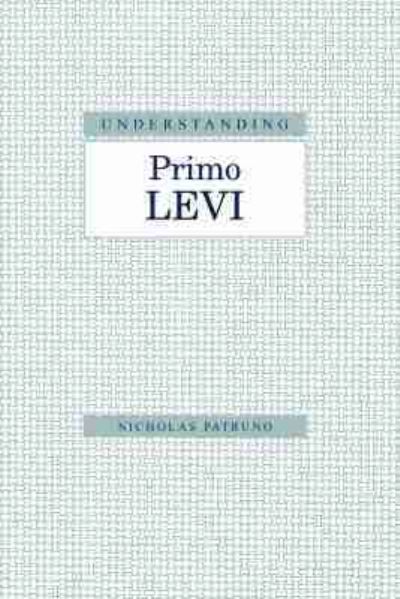
This is a thorough introduction to an author who mixes devotion to art and science with the harrowing experiences of Auschwitz.Primo Levi emerged from the Holocaust as one of the most powerful voices to bear witness to the atrocities of the Nazi concentration camps. Italian by birth and Jewish by ancestry, this young chemist survived Auschwitz and later, with his sober retelling of the horrific experience, consecrated the memory of millions who perished there.
In this companion to his works, Nicholas Patruno analyzes Levi's novels, short stories, and essays to reveal a writer who eloquently evoked the soul of the persecuted Jew but who never came to terms with the guilt of his own survival.Patruno contents that while Jewish themes recur throughout Levi's work, labeling him narrowly as an ethnic writer would be inaccurate. Rather, Patruno echoes Italo Calvino in defining Levi as a writer of 'encyclopedic vein' and argues that Levi's significance as artist and communicator lies in the fusion of his scientific sensibilities and literary creativity.
Patruno examines the synthesis of science and art in ""The Periodic Table"", considered by many to be Levi's greatest work. He also critiques ""The Monkey's Wrench"", Levi's short fiction and essays, the four books created directly from his Holocaust experience, and ""If Not Now, When?"", perhaps Levi's only truly conventional novel. Patruno shows that although Levi wrote absorbingly about a variety of topics, his work was always informed by his Holocaust experiences.
| ISBN: | 9781570037917 |
| Publication date: | 30th August 2008 |
| Author: | Nicholas Patruno |
| Publisher: | The University of South Carolina Press |
| Format: | Paperback |
| Pagination: | 192 pages |
| Series: | Understanding Modern European and Latin American Literature |
| Genres: |
Literary studies: c 1900 to c 2000 |
This is a thorough introduction to an author who mixes devotion to art and science with the harrowing experiences of Auschwitz.Primo Levi emerged from the Holocaust as one of the most powerful voices to bear witness to the atrocities of the Nazi concentration camps. Italian by birth and Jewish by ancestry, this young chemist survived Auschwitz and later, with his sober retelling of the horrific experience, consecrated the memory of millions who perished there.
Understanding Primo Levi features in the following genres: Literary studies: c 1900 to c 2000
Paperback. Not Available.
Understanding Primo Levi was written by Nicholas Patruno and published by The University of South Carolina Press
Understanding Primo Levi has 192 pages
Yes it is part of Understanding Modern European and Latin American Literature series