

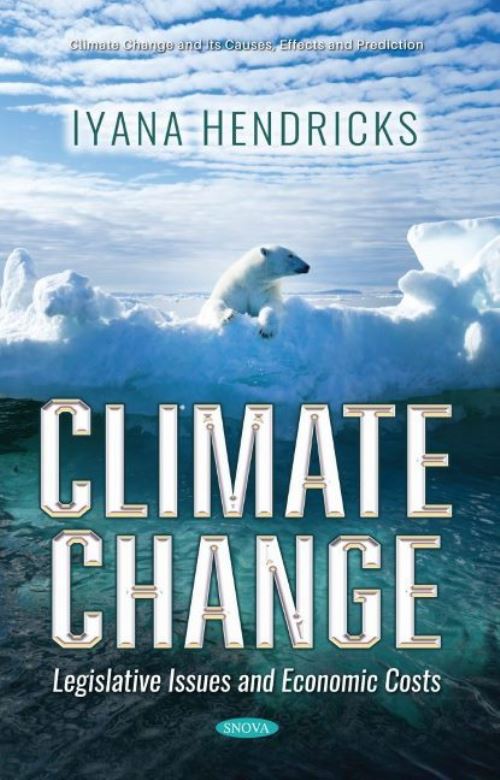
Chapter 1 will cover a brief history of U.S. climate change regulation; review the different types of regulation and legal actions that have been pursued in the national debate over GHGs; examine selected legal issues and next steps in related litigation; and address what these legal and regulatory developments mean for Congress. The United States committed to providing financial assistance to developing countries for climate-change-related activities through the United Nations Framework Convention on Climate Change (UNFCCC) as reported in chapter 2.
The costs of recent weather disasters have illustrated the need for planning for climate change risks and investing in resilience. Resilience is the ability to prepare and plan for, absorb, recover from, and more successfully adapt to adverse events, according to the National Academies of Science, Engineering, and Medicine. Chapter 3 reports that the federal government has not made measurable progress since 2017 to reduce fiscal exposure to climate change.
Chapter 4 focuses on the policy considerations and potential impacts of using a carbon tax or GHG emissions fee to control GHG emissions. Administered by EPA, Superfund is the principal federal program for addressing sites containing hazardous substances. Chapter 5 reviews issues related to the impact of climate change on nonfederal NPL sites A recent decision in the United States District Court for the District of Columbia Circuit has paused oil and gas exploration and production activity in certain leased areas of Wyoming and hinted at heightened requirements that the Bureau of Land Management (BLM) must satisfy to comply with the National Environmental Policy Act (NEPA) before issuing oil and gas leases.
Specifically, the decision will require BLM to conduct a more thorough review of the potential climate change impacts of certain oil and gas leases before allowing the lessees to conduct drilling operations as discussed in chapter 6. Chapter 7 summaries the content of the U.N. Framework Convention on Climate Change (UNFCCC) and its two subsidiary international treaties: the 1997 Kyoto Protocol (KP) and the 2015 Paris Agreement (PA).
The Green Climate Fund (GCF) was officially opened for capitalization at the U.N. Climate Summit in September 2014. Chapter 8 discusses how the funds were used.
| ISBN: | 9781536177572 |
| Publication date: | 30th April 2020 |
| Author: | Iyana Hendricks |
| Publisher: | Nova Science Publishers an imprint of Nova Science Publishers, Inc |
| Format: | Hardback |
| Pagination: | 271 pages |
| Series: | Climate Change and Its Causes, Effects and Prediction |
| Genres: |
Climate change |
Chapter 1 will cover a brief history of U.S. climate change regulation; review the different types of regulation and legal actions that have been pursued in the national debate over GHGs; examine selected legal issues and next steps in related litigation; and address what these legal and regulatory developments mean for Congress. The United States committed to providing financial assistance to developing countries for climate-change-related activities through the United Nations Framework Convention on Climate Change (UNFCCC) as reported in chapter 2.
Climate Change features in the following genres: Climate change
Hardback. £155.69, down from the £172.99 cover price. Not Available.
Climate Change was written by Iyana Hendricks and published by Nova Science Publishers an imprint of Nova Science Publishers, Inc
Climate Change has 271 pages
Yes it is part of Climate Change and Its Causes, Effects and Prediction series
£155.69, reduced from £172.99. Not Available.