

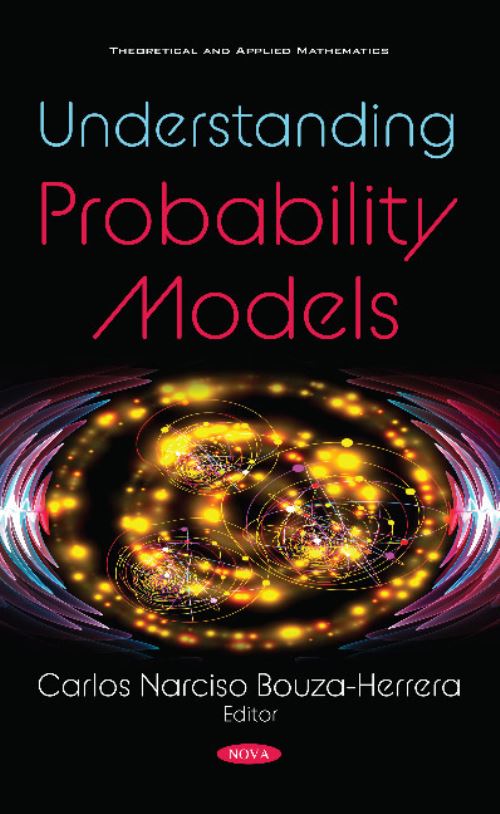
This book intends to highlight how the Theory of Probability supports, not only statistical modeling but how it allows describing different real life phenomena. It gives clues for understanding the philosophic roots of probability and how they are present in different areas of knowledge. The readers may use the book as a source for understanding the philosophical development of probability concepts and of the intents to obtain mathematical models.
The chapters deal with the understanding of how probability models are usable for determining: A Probabilistic model of the best flight value for the design on paper of a helicopter How to model the improvement of the behavior of water heating systems and of the reliability of systems Models for determining the probability of non responses in inquiries and to evaluate the missing data. The modeling of various problems related with the behavior of ordering models of use in decision rules and of general properties of Order Statistics.
A unified study of the probabilistic aspects of two Metaheuristics: Simulated Annealing and Tabu Search. How to obtain the identification of econometric techniques for dealing efficiently with the study of economic growth models under endogeneity. This book will be of interest for biometricians, statisticians, economists, engineers dealing with control and reliability, as well for informaticians.
| ISBN: | 9781536169959 |
| Publication date: | 22nd April 2020 |
| Author: | Carlos Narciso Bouza Herrera |
| Publisher: | Nova Science Publishers an imprint of Nova Science Publishers, Inc |
| Format: | Hardback |
| Pagination: | 219 pages |
| Series: | Theoretical and Applied Mathematics |
| Genres: |
Probability and statistics |
This book intends to highlight how the Theory of Probability supports, not only statistical modeling but how it allows describing different real life phenomena. It gives clues for understanding the philosophic roots of probability and how they are present in different areas of knowledge.
Understanding Probability Models features in the following genres: Probability and statistics
Hardback. Not Available.
Understanding Probability Models was written by Carlos Narciso Bouza Herrera and published by Nova Science Publishers an imprint of Nova Science Publishers, Inc
Understanding Probability Models has 219 pages
Yes it is part of Theoretical and Applied Mathematics series