

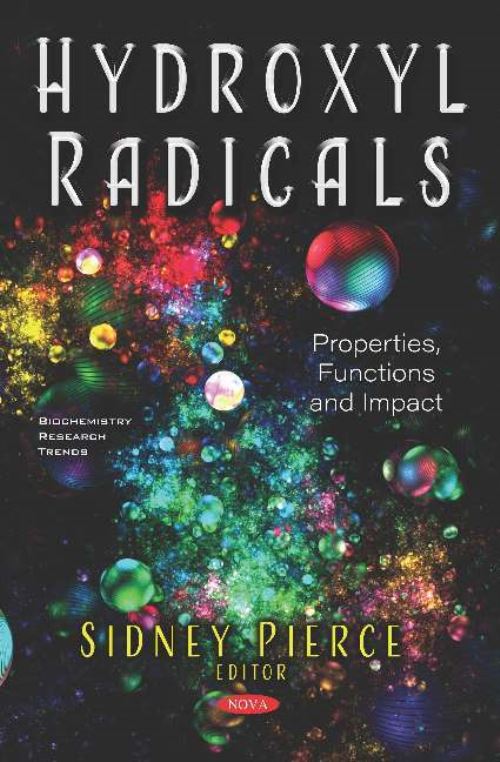
In this book, to understand the reaction of OH in detail at the surface of a photocatalyst, an electrochemical analysis of the irradiated semiconductors was attempted via the fluorescence probe method. For the single crystal rutile TiO2 electrodes, the facet dependence on the OH formation could be observed along with oxygen evolution by the photooxidation of water. In the subsequent study, the authors present the kinetics and mechanism of the gas-phase reaction of CH3CH2OCH2CH2Cl (2-chloroethyl ethyl ether, 2ClEEE) with OH radical using quantum chemical methods.
Optimization and frequency calculations of all the species involved in the reactions were carried out at BHandHLYP/6-311++G(2d,2p) level of theory. The closing chapter is focused on the effect of hydroxyl radical and the regulation mechanism. Host immune systems generate reactive oxygen species) in order to defend microbial pathogens.
Reactive oxygen species induce oxidative stress and encompass nonradical oxidants, such as hydrogen peroxide and singlet oxygen, as well as oxygen free radicals, such as superoxide anion radical and hydroxyl radical.
| ISBN: | 9781536166811 |
| Publication date: | 15th November 2019 |
| Author: | Sidney Pierce |
| Publisher: | Nova Science Publishers an imprint of Nova Science Publishers, Inc |
| Format: | Paperback |
| Pagination: | 108 pages |
| Series: | Biochemistry Research Trends |
| Genres: |
Biochemistry |
In this book, to understand the reaction of OH in detail at the surface of a photocatalyst, an electrochemical analysis of the irradiated semiconductors was attempted via the fluorescence probe method. For the single crystal rutile TiO2 electrodes, the facet dependence on the OH formation could be observed along with oxygen evolution by the photooxidation of water.
Hydroxyl Radicals features in the following genres: Biochemistry
Paperback. Not Available.
Hydroxyl Radicals was written by Sidney Pierce and published by Nova Science Publishers an imprint of Nova Science Publishers, Inc
Hydroxyl Radicals has 108 pages
Yes it is part of Biochemistry Research Trends series