Federal Aviation Administration (FAA) programs are funded under four broad budget accounts:
operations and maintenance (such as air traffic control and aviation safety functions)
facilities and equipment (such as control towers and navigation beacons)
grants for airports under the Airport Improvement Program (AIP)
and civil aviation research conducted or sponsored by FAA. Additionally, certain aviation programs are administered by the Department of Transportation (DOT) Office of the Secretary, including the Essential Air Service (EAS) program, which subsidizes airline service to certain small or isolated communities as discussed in chapter 1. Chapter 2 reviews airline IT outages and examines DOT's and FAA's roles related to airline IT outages and what is known about these outages and their effects on passengers Since 1992, Passenger Facility Charges (PFC) have been collected from airline passengers, as part of the airline ticket purchase, to help commercial service airports pay for capital development projects such as construction or improvement of runways, terminals, and roadways, among other things as reported in chapter 3. Chapter 4 examines, among other issues, trends in DOT's data on airline service
the effectiveness of DOT's compliance efforts
and the extent to which DOT's passenger education efforts align with key practices for consumer outreach. Chapter 5 describes how DOT's review of antitrust immunity applications considers the potential effects on consumers and evaluates how DOT monitors approved grants of antitrust immunity Chapter 6 examines the extent to which DOT's process for awarding fiscal year 2014-2016 grants was consistent with its grant notices and recommended practices for awarding discretionary grants, and examines the extent to which fiscal year 2010-2014 grants assisted airports in improving their air service, and identifies factors that affect the success of grant projects. The Airline Deregulation Act of 1978 gave airlines almost total freedom to determine which domestic markets to serve and what airfares to charge. This raised the concern that communities with relatively low passenger levels would lose service as carriers shifted their operations to serve larger and often more profitable markets. To address this concern, Congress established the Essential Air Service (EAS) program to ensure that small communities that were served by certificated air carriers before deregulation would continue to receive scheduled passenger service, with subsidies if necessary as discussed in chapter 7. Chapter 8 describes the reasons why TSA established the TSO Basic Training program
discusses factors OTD considers when updating TSO Basic Training curriculum
and assesses the extent to which TSA evaluates its TSO Basic Training program
Buy from our bookstore and 25% of the cover price will be given to a school of your choice to buy more books. *15% of eBooks.
Frequently asked questions
Federal Aviation Administration (FAA) programs are funded under four broad budget accounts: operations and maintenance (such as air traffic control and aviation safety functions); facilities and equipment (such as control towers and navigation beacons); grants for airports under the Airport Improvement Program (AIP); and civil aviation research conducted or sponsored by FAA. Additionally, certain aviation programs are administered by the Department of Transportation (DOT) Office of the Secretary, including the Essential Air Service (EAS) program, which subsidizes airline service to certain small or isolated communities as discussed in chapter 1.
Air Transportation features in the following genres: Aerospace and aviation technology, Aircraft and aviation
Hardback. Not Available.
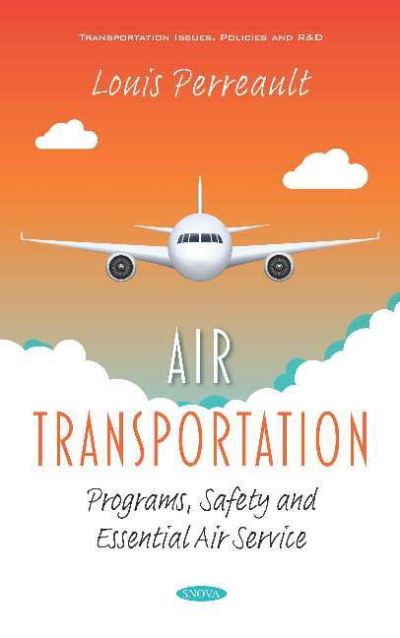
Air Transportation was written by Louis Perreault and published by Nova Science Publishers an imprint of Nova Science Publishers, Inc
Join our community for the latest bookish news, reading recommendations, exclusive opening extracts, author events and competitions. It\'s all free. And enter a monthly draw to win a £50 Gift Card. See past winners here