

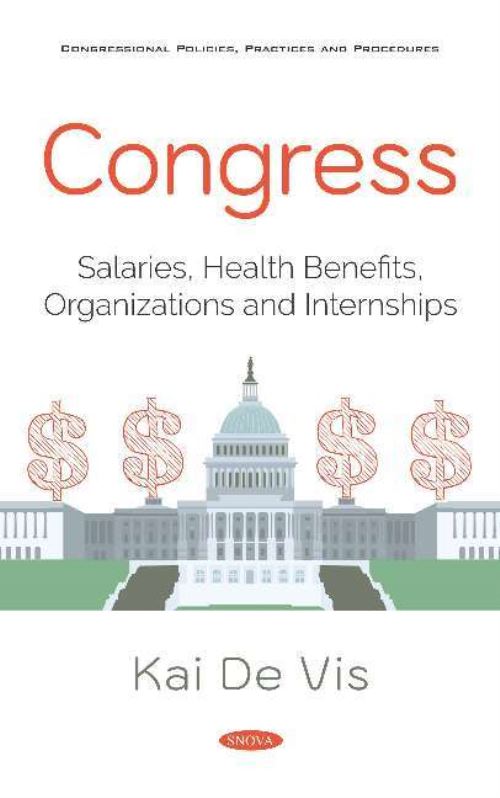
Congress is required by Article I, Section 6, of the Constitution to determine its own pay. In the past, Congress periodically enacted specific legislation to alter its pay; the last time this occurred affected pay in 1991. More recently, pay has been determined pursuant to laws establishing formulas for automatic adjustments.
Chapters 1 provides historical tables on the rate of pay for Members of Congress since 1789; details on enacted legislation with language prohibiting the automatic annual pay adjustment since the most recent adjustment; the adjustments projected by the Ethics Reform Act as compared with actual adjustments in Member pay; and Member pay in constant and current dollars since 1992. Chapter 2 contains information on actions taken affecting each pay year since the establishment of the Ethics Reform Act adjustment procedure.
Chapter 3 provides basic information on congressional salaries and allowances and recent developments. Chapter 4 provides pay data for 16 staff position titles that are typically used in Senators' offices. Chapter 5 provides pay data for 13 staff position titles that are used in Senate committees, and for which sufficient data could be identified.
Chapter 6 provides pay data for 12 staff position titles that are typically used in House Members' offices. Chapter 7 provides pay data for 11 staff position titles that are used in House committees The federal government, as an employer, also offers health benefits to its employees and retirees.1 In general, federal employees receive health benefits through the Federal Employees Health Benefits (FEHB) Program, administered by the Office of Personnel Management (OPM).
In addition to health insurance coverage, chapter 8 describes other health benefits available to Members and congressional staff, including the Federal Flexible Spending Account Program (FSAFEDS); the Federal Employees Dental and Vision Insurance Program (FEDVIP); the Federal Long Term Care Insurance Program (FLTCIP); the Office of the Attending Physician; and treatment in military facilities. Chapter 9 examines the historical development and contemporary role of Congressional Member Organizations (CMOs) in the House, as well as informal Member groups in the House, Senate, and across the chambers.
Commonly, these groups are referred to as caucuses, but they will be referred to collectively as informal Member organizations in this chapter to avoid confusion with official party caucuses. Many interns serve Congress, assisting individual Members, committees, and other offices or support services. Interns serve the House or Senate in a temporary capacity, primarily for an educational benefit, although some interns may receive pay for their service.
Chapter 10 addresses frequently asked questions (FAQs) about congressional interns and internships.
| ISBN: | 9781536161137 |
| Publication date: | 13th August 2019 |
| Author: | Kai De Vis |
| Publisher: | Nova Science Publishers an imprint of Nova Science Publishers, Inc |
| Format: | Hardback |
| Pagination: | 338 pages |
| Series: | Congressional Policies, Practices and Procedures |
| Genres: |
Politics and government |
Congress is required by Article I, Section 6, of the Constitution to determine its own pay. In the past, Congress periodically enacted specific legislation to alter its pay; the last time this occurred affected pay in 1991.
Congress features in the following genres: Politics and government
Hardback. Not Available.
Congress was written by Kai De Vis and published by Nova Science Publishers an imprint of Nova Science Publishers, Inc
Congress has 338 pages
Yes it is part of Congressional Policies, Practices and Procedures series