

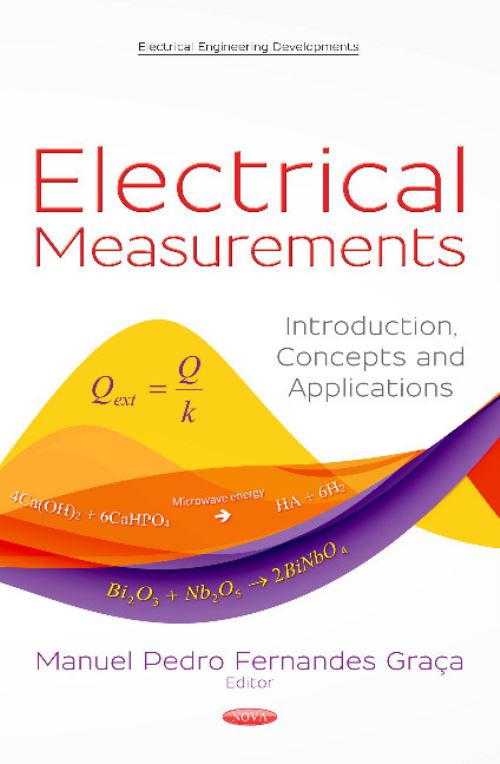
This book, which is divided into twelve chapters, aims to present the reader with an introduction to the electrical characterization of materials, specifically solid materials. In this book, the reader will find both theoretical and experimental concepts of some methods that can be used to know and understand physically the electrical response of different materials. In this project, a theoretical scan is made of several experimental techniques that characterize materials at the level of dc and ac conductivity.
In ac conductivity, several approaches are presented from techniques in the low frequency regime (i.e., in the range of the radio frequencies) up to the regime of higher frequencies (i.e., in the range of microwaves). An introductory analysis of dielectric relaxation phenomena through the impedance spectroscopy as well as the phenomena of thermally stimulated polarization and depolarization are discussed. In preparing this book, each contributor was asked to present in the end of each chapter a small, but specific case study, with the purpose of facilitating the transposition of the methods and theories presented for a real case.
This approach is a valuable part of this book, which includes analyses of different types of materials with structures, forms and electrical responses, from glasses, ceramics, and biomaterials to photoactive materials with potential use in photovoltaic cells.
| ISBN: | 9781536129731 |
| Publication date: | 1st December 2017 |
| Author: | Manuel Pedro Fernandes Graça |
| Publisher: | Nova Science Publishers an imprint of Nova Science Publishers, Inc |
| Format: | Hardback |
| Pagination: | 408 pages |
| Series: | Electrical Engineering Developments |
| Genres: |
Electrical engineering |
This book, which is divided into twelve chapters, aims to present the reader with an introduction to the electrical characterization of materials, specifically solid materials. In this book, the reader will find both theoretical and experimental concepts of some methods that can be used to know and understand physically the electrical response of different materials.
Electrical Measurements features in the following genres: Electrical engineering
Hardback. Not Available.
Electrical Measurements was written by Manuel Pedro Fernandes Graça and published by Nova Science Publishers an imprint of Nova Science Publishers, Inc
Electrical Measurements has 408 pages
Yes it is part of Electrical Engineering Developments series