

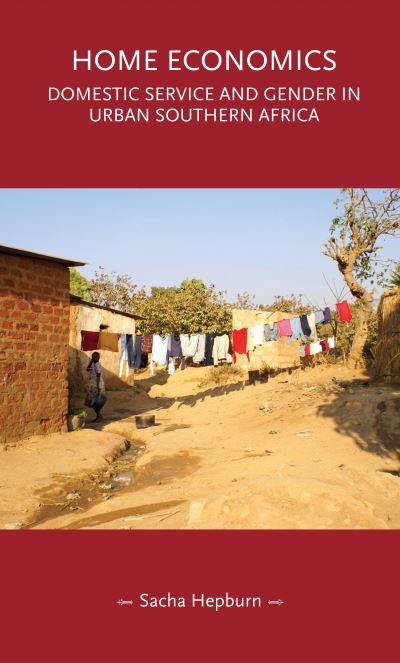
Domestic service has long been one of the largest forms of urban employment across southern Africa. Home economics provides the first comprehensive history of this essential sector in the decades following independence and the end of apartheid. Focusing on Lusaka and drawing wider comparisons, the book traces how Black workers and employers adapted existing models of domestic service as part of broader responses to changing gendered employment patterns, economic decline, and endemic poverty.
It reveals how kin-based domestic service gradually displaced wage labour and how women and girl workers came to dominate kin-based and waged domestic service, with profound consequences for labour regulation and worker organising. Theoretically innovative and empirically rich, the book provides essential insights into debates about gender, work, and urban economies that are critical to understanding southern Africa's post-colonial and post-apartheid history.
This book is relevant to United Nations Sustainable Development Goal 8, Decent work and economic growth
| ISBN: | 9781526162021 |
| Publication date: | 16th August 2022 |
| Author: | Sacha Hepburn |
| Publisher: | Manchester University Press |
| Format: | Hardback |
| Pagination: | 256 pages |
| Series: | Gender in History |
| Genres: |
African history Gender studies: women and girls Sociology: work and labour Social discrimination and social justice |
Domestic service has long been one of the largest forms of urban employment across southern Africa. Home economics provides the first comprehensive history of this essential sector in the decades following independence and the end of apartheid.
Home Economics features in the following genres: African history, Gender studies: women and girls, Sociology: work and labour, Social discrimination and social justice
Hardback. £72.00, down from the £80.00 cover price. Not Available.
Home Economics was written by Sacha Hepburn and published by Manchester University Press
Home Economics has 256 pages
Yes it is part of Gender in History series
£72.00, reduced from £80.00. Not Available.