

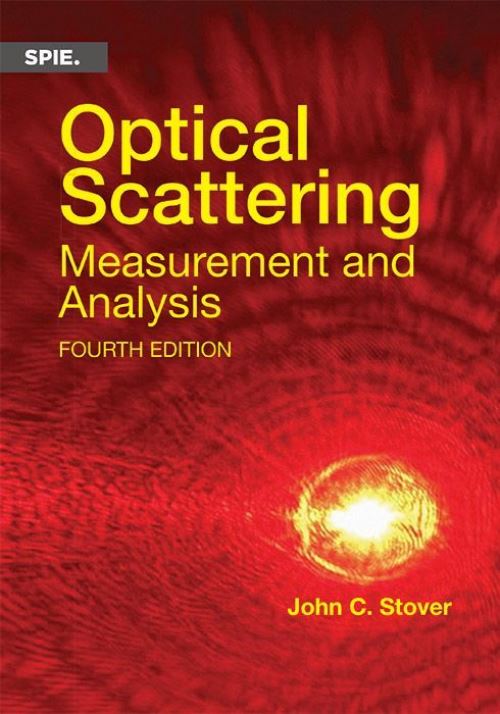
The early editions of Optical Scattering were dominated by the exploration of the relationship between roughness and scatter from optically smooth surfaces by developing the relationship between the surface statistics and the measured surface scatter in BRDF units. The upper limit roughness for using scatter measurement to calculate surface roughness was well established.
The basic concept of reciprocity, as it applies to scatter, could have been in the earlier editions and that mistake is corrected in this edition. The third edition added the use of scatter in the semiconductor industry, which included mapping, sizing, and identifying wafer pits and particles using their measured scatter.
These concepts and the related calculations are, of course, repeated in this edition, but useful ways to move product inspection beyond the uncoated smooth surface limit are new in these pages.
It may be impossible to calculate root mean square surface roughness, but it is straightforward for manufacturers to define "good" and "bad" versions of their products and then use related BRDF signals to very quickly tell the difference during manufacturing. After all, beauty is in the eye of the beholder, and what we see is scattered light.
Very simple scatter measurements can detect these product differences as fast as they are produced. The differences can be changes in BRDF, or a newly defined parameter, "fractional scatter," can be tracked. Compared to expensive semiconductor measurements, inspection of everyday products (kitchen appliances, car paint, furniture appearance, etc.) for appearance represents a huge market that can be economically addressed with simple, fast scatter systems.
In addition to repeating the basic scatter concepts and definitions, the fourth edition presents this as a huge underdeveloped application for scatterometry.
| ISBN: | 9781510690288 |
| Publication date: | 19th September 2025 |
| Author: | John C Stover |
| Publisher: | SPIE an imprint of SPIE Press |
| Format: | Paperback |
| Pagination: | 368 pages |
| Series: | Press Monographs |
| Genres: |
Applied optics |
The early editions of Optical Scattering were dominated by the exploration of the relationship between roughness and scatter from optically smooth surfaces by developing the relationship between the surface statistics and the measured surface scatter in BRDF units. The upper limit roughness for using scatter measurement to calculate surface roughness was well established.
Optical Scattering features in the following genres: Applied optics
Paperback. £66.60, down from the £74.00 cover price. Not Available.
Optical Scattering was written by John C Stover and published by SPIE an imprint of SPIE Press
Optical Scattering has 368 pages
Yes it is part of Press Monographs series
£66.60, reduced from £74.00. Not Available.