

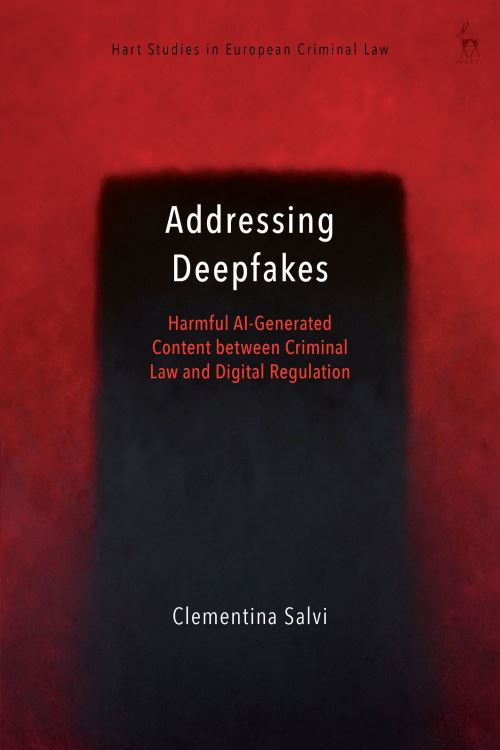
This book offers a comprehensive legal analysis of the urgent challenges posed by deepfakes, focusing on the restrictive measures proposed or introduced to address their related harms.
Readers will gain a clear understanding of the harms associated with deepfakes - especially in areas like non-consensual sexualised content and political disinformation - and how criminal and digital regulatory systems are attempting to respond.
From a criminal law perspective, the book offers a dual-level critique. On the one hand, criminal law is invoked for its expressive and symbolic function, particularly in response to the discriminatory and gender-based harms often associated with deepfakes, as well as the broader need to prevent systemic risks to democratic society when it comes to electoral manipulation and freedom of thought. Here, criminal law would play a vital role in affirming societal condemnation of such conduct and in acknowledging the serious impact on victims. On the other hand, its use is increasingly entangled with emerging frameworks of digital regulation, taking on a more instrumental role in defining illegal content and reinforcing standards shaped primarily by private platforms and regulatory bodies. This dual function raises fundamental questions about the legitimacy and efficacy of using criminal law-the most coercive form of state power-for purposes that extend beyond its traditional scope.
Additionally, the book explores regulatory measures aimed at controlling deepfakes, considered both as AI-generated content and as harmful online material. Discussions around content moderation, transparency duties-such as labelling and watermarking-and safety by design measures are gaining attention globally, with the European Union's Digital Services Act and AI Act leading the way. The book's primary goal is to bridge the two worlds of criminal law and digital regulation through a careful and critical analysis, making it a valuable resource for a broad audience.
| ISBN: | 9781509996384 |
| Publication date: | 7th January 2027 |
| Author: | Clementina Salvi |
| Publisher: | Hart Publishing an imprint of Bloomsbury Publishing (UK) |
| Format: | Hardback |
| Pagination: | 384 pages |
| Series: | Hart Studies in European Criminal Law |
| Genres: |
Disinformation and misinformation Comparative law Criminal law: procedure and offences Digital and information technologies: Legal aspects Online safety and behaviour |
This book offers a comprehensive legal analysis of the urgent challenges posed by deepfakes, focusing on the restrictive measures proposed or introduced to address their related harms.Readers will gain a clear understanding of the harms associated with deepfakes - especially in areas like non-consensual sexualised content and political disinformation - and how criminal and digital regulatory systems are attempting to respond.From a criminal law perspective, the book offers a dual-level critique. On the one hand, criminal law is invoked for its expressive and symbolic function, particularly in response to the discriminatory and gender-based harms often associated with deepfakes, as well as the broader need to prevent systemic risks to democratic society when it comes to electoral manipulation and freedom of thought.
Addressing Deepfakes features in the following genres: Disinformation and misinformation, Comparative law, Criminal law: procedure and offences, Digital and information technologies: Legal aspects, Online safety and behaviour
Hardback. £81.00, down from the £90.00 cover price. Not Available.
Addressing Deepfakes was written by Clementina Salvi and published by Hart Publishing an imprint of Bloomsbury Publishing (UK)
Addressing Deepfakes has 384 pages
Yes it is part of Hart Studies in European Criminal Law series
£81.00, reduced from £90.00. Not Available.