

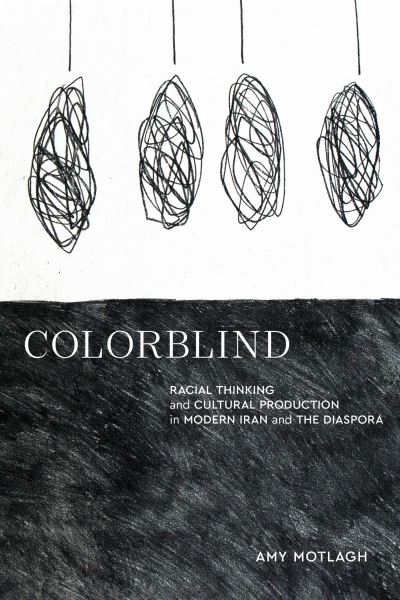
With this book, Amy Motlagh considers how racial thinking underpins cultural practices in Iran and the Iranian diaspora. Despite cultural traditions depicting black people and the documented presence of black Iranians, many have insisted that race is not an important aspect of Iranian culture, that "blackness" does not exist in Iran. Instead, it is the notion of being "Persian" that binds all Iranians together. But, as Motlagh argues, the word "Persian" masks a long racial history that depends on the specter of blackness to define what is truly Iranian.
Colorblind critically examines how these concepts express themselves in folklore, ethnography, literature, and films to show how understandings of race and slavery have moved from home country to host, and from host to home. In particular, ambivalence surrounding the concepts of "race" and "blackness" prevents Iranians from fully interrogating their own racial thinking, even while some diasporic Iranians position themselves as racially liminal and non-white. By closely examining these efforts, as well as the cultural and historical foundations they were built on, this book reveals how ideas about race and slavery in Iran have forged a specific conception of modern Iranian cultural identity.
| ISBN: | 9781503646063 |
| Publication date: | 24th March 2026 |
| Author: | Amy Motlagh |
| Publisher: | Stanford University Press |
| Format: | Paperback |
| Pagination: | 248 pages |
| Series: | Stanford Studies in Middle Eastern and Islamic Societies and Cultures |
| Genres: |
Middle Eastern history Ethnic groups and multicultural studies Ethnic studies Literature: history and criticism |
With this book, Amy Motlagh considers how racial thinking underpins cultural practices in Iran and the Iranian diaspora. Despite cultural traditions depicting black people and the documented presence of black Iranians, many have insisted that race is not an important aspect of Iranian culture, that "blackness" does not exist in Iran.
Colorblind features in the following genres: Middle Eastern history, Ethnic groups and multicultural studies, Ethnic studies, Literature: history and criticism
Paperback, Hardback. £20.69, down from the £22.99 cover price. Not Available.
Colorblind was written by Amy Motlagh and published by Stanford University Press
Colorblind has 248 pages
Yes it is part of Stanford Studies in Middle Eastern and Islamic Societies and Cultures series
£20.69, reduced from £22.99. Not Available.