

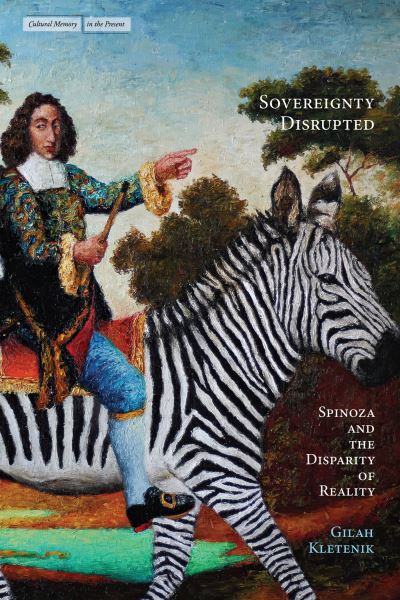
Anthropocentrism, white supremacy, and cishetsexism remain with us. The intransigence of such oppressions, this book proposes, is stayed by the unrecognized force that sovereignty maintains across the domains of "Western" philosophy. To corroborate this original thesis, the book uncovers how the rationales of sovereignty secure dominant "Western" theories about the nature of reality, the promise of reason, and the status of humans. Such approaches rely on properties of sovereignty that essentialize difference, naturalize hierarchy, and valorize autonomy.
To redress these models and the supremacies they promote, Gilah Kletenik turns to Spinoza. Through a fresh reading of his Ethics, Kletenik develops an egalitarian alternative that starts with denaturalizing sovereignty. It is not a coincidence that Spinoza critiques the hegemonic rationales of "Western" philosophy nor that his doing so has eluded analysis.
This is because his insurrection against "Western" sovereignties is sparked by the scintillas of immanence that he inherits from medieval Jewish and Islamic naturalism, the very philosophies that Christian, "Western," thought has repressed. This book recovers these marginalized voices, exposing centuries of interpretations that assimilate Spinoza's program to the sovereignties he disrupts.
Kletenik thinks with Spinoza to unmask the supremacies of colonialism, neoliberalism, and cishetsexism alongside the sovereignties anchoring contemporary theory. In critiquing "Western" philosophy, Kletenik limns a more ethical alternative, oriented by immanence and disparity.
| ISBN: | 9781503644465 |
| Publication date: | 21st October 2025 |
| Author: | Gilah Kletenik |
| Publisher: | Stanford University Press |
| Format: | Paperback |
| Pagination: | 432 pages |
| Series: | Cultural Memory in the Present |
| Genres: |
Philosophical traditions and schools of thought Philosophy: metaphysics and ontology |
Anthropocentrism, white supremacy, and cishetsexism remain with us. The intransigence of such oppressions, this book proposes, is stayed by the unrecognized force that sovereignty maintains across the domains of "Western" philosophy.
Sovereignty Disrupted features in the following genres: Philosophical traditions and schools of thought, Philosophy: metaphysics and ontology
Hardback, Paperback. Not Available.
Sovereignty Disrupted was written by Gilah Kletenik and published by Stanford University Press
Sovereignty Disrupted has 432 pages
Yes it is part of Cultural Memory in the Present series