

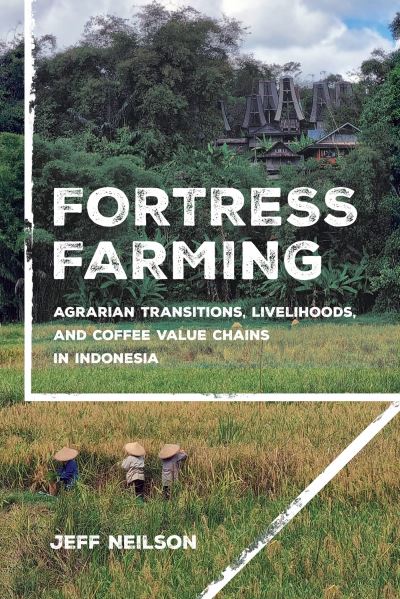
Fortress Farming identifies in Indonesia's rural coffee-growing regions an alternative livelihood strategy that is reshaping relationships with land and informing Indonesia's agrarian transition. Jeff Neilson presents "fortress farming" households as ones that are reluctant to embrace productivity-maximizing agriculture, even as they interact with commodity markets and powerful downstream companies. Rather, these households tenaciously maintain access to land as a last defense against insecurity in a precarious global economy, all the while actively tapping into off-farm income sources. Fortress farming confounds assumptions that the development process entails an inevitable transition away from the land and into city-based manufacturing.
Shifting away from production to take a fuller view of rural Indonesian coffee-growing communities, Fortress Farming explores how and why defensive farming strategies have emerged, and what these tendencies mean for our understanding of agrarian transition in late-industrializing countries in the early twenty-first century. Neilson posits that late-industrializing countries may never undergo a full agrarian transition: In the alternative livelihood practice of fortress farming, we see a way that local social institutions can resist, or at least modify, the productive forces of capitalist agriculture.
| ISBN: | 9781501780929 |
| Publication date: | 15th May 2025 |
| Author: | Jeff Neilson |
| Publisher: | Cornell University Press |
| Format: | Paperback |
| Pagination: | 306 pages |
| Series: | Cornell Series on Land. New Perspectives on Territory, Development, and Environment |
| Genres: |
Human geography Cultural studies: food and society Ethnic studies |
Fortress Farming identifies in Indonesia's rural coffee-growing regions an alternative livelihood strategy that is reshaping relationships with land and informing Indonesia's agrarian transition. Jeff Neilson presents "fortress farming" households as ones that are reluctant to embrace productivity-maximizing agriculture, even as they interact with commodity markets and powerful downstream companies.
Fortress Farming features in the following genres: Human geography, Cultural studies: food and society, Ethnic studies
Hardback, Paperback. £26.99, down from the £29.99 cover price. Not Available.
Fortress Farming was written by Jeff Neilson and published by Cornell University Press
Fortress Farming has 306 pages
Yes it is part of Cornell Series on Land. New Perspectives on Territory, Development, and Environment series
£26.99, reduced from £29.99. Not Available.