

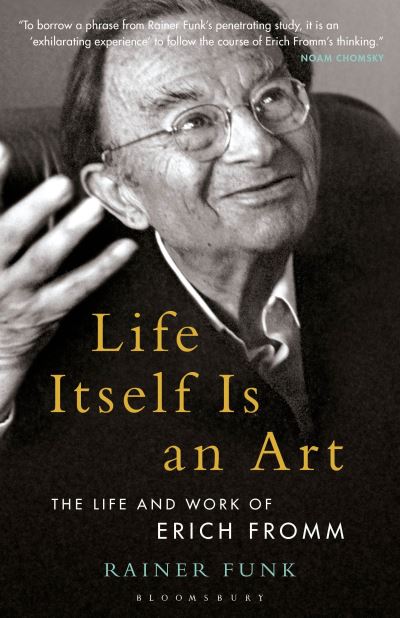
A Choice Outstanding Academic Title of the Year
Erich Fromm (1900-1980) is known to most readers as the author of the international bestseller The Art of Loving (1956). What may be less widely known is that Fromm was a social psychoanalyst whose psychoanalytic theories, developed around a humanistic concept of man and society, have had a profound impact on many fields and disciplines: on social life and societal organization, on politics, on religion, on psychotherapy and, last but not least, on the practice of mindfulness.
Rainer Funk was Erich Fromm's last assistant. He wrote his dissertation about Fromm, was designated by Fromm's last will to be his sole literary executor, and is the editor of Fromm's writings. From his very intimate knowledge of Fromm's life and ideas, and his access to an archive that includes 6,000 letters, Funk introduces Fromm's central concepts and examines them in relation to Fromm's lived experiences and to his idea that life itself is an art.
The question of "the art of living" runs through all of the chapters, from the Introduction, in which Funk describes meeting Fromm for the first time in 1972, to the last chapter, in which Funk reflects on the impact of Fromm's social-psychoanalytic writings and his efforts to live well.
| ISBN: | 9781501351440 |
| Publication date: | 13th June 2019 |
| Author: | Rainer Funk |
| Publisher: | Bloomsbury Academic an imprint of Bloomsbury Publishing (UK) |
| Format: | Paperback |
| Pagination: | 192 pages |
| Series: | Psychoanalytic Horizons |
| Genres: |
Psychological theory, systems, schools and viewpoints Psychoanalytical and Freudian psychology Literary studies: c 1900 to c 2000 Literary theory Biography: general Literature: history and criticism |
A Choice Outstanding Academic Title of the YearErich Fromm (1900-1980) is known to most readers as the author of the international bestseller The Art of Loving (1956). What may be less widely known is that Fromm was a social psychoanalyst whose psychoanalytic theories, developed around a humanistic concept of man and society, have had a profound impact on many fields and disciplines: on social life and societal organization, on politics, on religion, on psychotherapy and, last but not least, on the practice of mindfulness.
Life Itself Is an Art features in the following genres: Psychological theory, systems, schools and viewpoints, Psychoanalytical and Freudian psychology, Literary studies: c 1900 to c 2000, Literary theory, Biography: general, Literature: history and criticism
Paperback. £21.59, down from the £23.99 cover price. Not Available.
Life Itself Is an Art was written by Rainer Funk and published by Bloomsbury Academic an imprint of Bloomsbury Publishing (UK)
Life Itself Is an Art has 192 pages
Yes it is part of Psychoanalytic Horizons series
£21.59, reduced from £23.99. Not Available.