

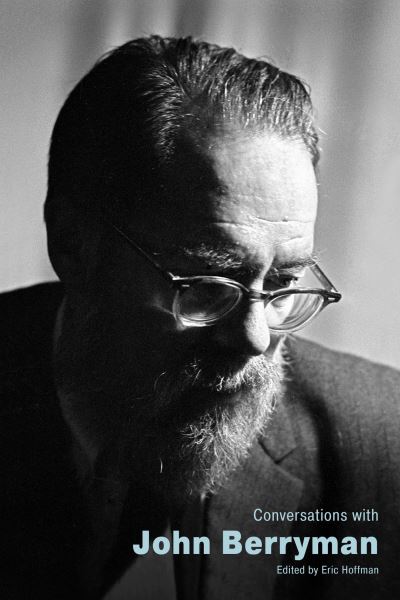
The poetry of John Berryman (1914-1972) is primarily concerned with the self in response to the rapid social, political, sexual, racial, and technological transformations of the twentieth century, and their impact on the psyche and spirit, both individual and collective. He was just as likely to find inspiration in his local newspaper as he did from the poetry of Hopkins or Milton.
In fact, in contrast to the popular perception of Berryman drunkenly composing strange, dreamlike, abstract, esoteric poems, Berryman was intensely aware of craft. His best work routinely utilizes a variety of rhetorical styles, shifting effortlessly from the lyric to the prosaic.
For Berryman, poetry was nothing less than a vocation, a mission, and a way of life. Though he desired fame, he acknowledged its relative unimportance when he stated that the "important thing is that your work is something no one else can do". As a result, Berryman very rarely granted interviews - "I teach and I write", he explained, "I'm not copy" - yet when he did the results were always captivating.
Collected in Conversations with John Berryman are all of Berryman's major interviews, personality pieces, profiles, and local interest items, where interviewers attempt to unravel him, as both Berryman and his interlocutors struggle to find value in poetry in a fallen world.
| ISBN: | 9781496826336 |
| Publication date: | 28th February 2021 |
| Author: | John Berryman, Eric R Hoffman |
| Publisher: | University Press of Mississippi |
| Format: | Paperback |
| Pagination: | 240 pages |
| Series: | Literary Conversations Series |
| Genres: |
Literature: history and criticism Literary companions, book reviews and guides Literary studies: general Literary studies: poetry and poets |
The poetry of John Berryman (1914-1972) is primarily concerned with the self in response to the rapid social, political, sexual, racial, and technological transformations of the twentieth century, and their impact on the psyche and spirit, both individual and collective. He was just as likely to find inspiration in his local newspaper as he did from the poetry of Hopkins or Milton.
Conversations With John Berryman features in the following genres: Literature: history and criticism, Literary companions, book reviews and guides, Literary studies: general, Literary studies: poetry and poets
Hardback, Paperback. Not Available.
Conversations With John Berryman was written by John Berryman, Eric R Hoffman and published by University Press of Mississippi
Conversations With John Berryman has 240 pages
Yes it is part of Literary Conversations Series series