

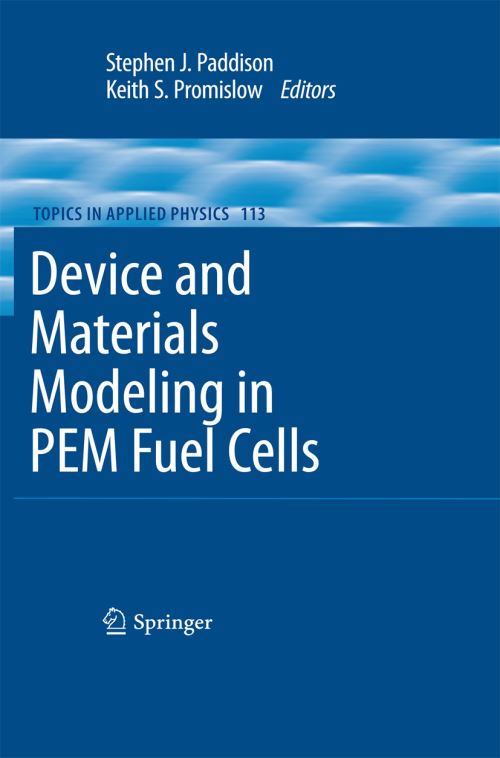
Computational studies on fuel cell-related issues are increasingly common. These studies range from engineering level models of fuel cell systems and stacks to molecular level, electronic structure calculations on the behavior of membranes and catalysts, and everything in between. This volume explores this range.
It is appropriate to ask what, if anything, does this work tell us that we cannot deduce intuitively? Does the emperor have any clothes? In answering this question resolutely in the affirmative, I will also take the liberty to comment a bit on what makes the effort worthwhile to both the perpetrator(s) of the computational study (hereafter I will use the blanket terms modeler and model for both engineering and chemical physics contexts) and to the rest of the world.
The requirements of utility are different in the two spheres. As with any activity, there is a range of quality of work within the modeling community. So what constitutes a useful model?
What are the best practices, serving both the needs of the promulgator and consumer? Some of the key com- nents are covered below. First, let me provide a word on my 'credentials' for such commentary.
I have participated in, and sometimes initiated, a c- tinuous series of such efforts devoted to studies of PEMFC components and cells over the past 17 years. All that participation was from the experim- tal, qualitative side of the effort.
| ISBN: | 9781489988317 |
| Publication date: | 4th November 2014 |
| Author: | Stephen J Paddison, Keith S Promislow |
| Publisher: | Springer an imprint of Springer New York |
| Format: | Paperback |
| Pagination: | 588 pages |
| Series: | Topics in Applied Physics |
| Genres: |
Electrical engineering Condensed matter physics (liquid state and solid state physics) Physical chemistry Energy, power generation, distribution and storage Energy technology and engineering |
Computational studies on fuel cell-related issues are increasingly common. These studies range from engineering level models of fuel cell systems and stacks to molecular level, electronic structure calculations on the behavior of membranes and catalysts, and everything in between.
Device and Materials Modeling in PEM Fuel Cells features in the following genres: Electrical engineering, Condensed matter physics (liquid state and solid state physics), Physical chemistry, Energy, power generation, distribution and storage, Energy technology and engineering
Paperback. Not Available.
Device and Materials Modeling in PEM Fuel Cells was written by Stephen J Paddison, Keith S Promislow and published by Springer an imprint of Springer New York
Device and Materials Modeling in PEM Fuel Cells has 588 pages
Yes it is part of Topics in Applied Physics series