

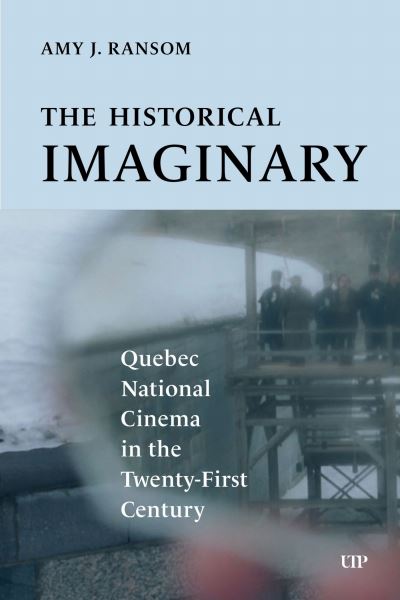
Since the year 2000, Quebec's film industry has burgeoned with a parabolic increase in the number of films released and the production of a wide array of film genres. Building on the notion of 'Quebec national cinema' outlined by Bill Marshall, this book analyses French-language fiction features that construct images of the past.
Scholar of Quebec cultural studies, Amy J. Ransom, explains how the studied films participate in the nation's 'historical imaginary', revisiting and revisioning the past for present-day audiences and constructing new 'sites of memory' for twenty-first-century Québécois viewers. Each chapter examines a film genre explicitly engaged in representing the past: the historical film per se, the historical fantasy, the literary adaptation, the biopic and memoir, and the period film.
The Historical Imaginary offers analyses of significant films and filmmakers while also providing a broader overview of these genres' development in Quebec. From examining rigorous historical documents like Le 15 février, 1839 (2001) to quirky fantasies like Je me souviens (2009), and from the heritage films Nouvelle France (2004) and Maria Chapdaleine (2021) to the biopics Louis Cyr, l'homme le plus fort du monde (2013) and La Bolduc (2018), Ransom's analyses travel across time, space, and genres.
In this insightful cultural investigation, three generations of filmmakers are brought together to highlight their influence upon the construction of a Québécois national identity.
| ISBN: | 9781487560966 |
| Publication date: | 20th February 2026 |
| Author: | Amy J Ransom |
| Publisher: | University of Toronto Press |
| Format: | Hardback |
| Pagination: | 312 pages |
| Genres: |
Film history, theory or criticism Popular culture Ethnic studies Communication studies Films, cinema |
Since the year 2000, Quebec's film industry has burgeoned with a parabolic increase in the number of films released and the production of a wide array of film genres. Building on the notion of 'Quebec national cinema' outlined by Bill Marshall, this book analyses French-language fiction features that construct images of the past.
The Historical Imaginary features in the following genres: Film history, theory or criticism, Popular culture, Ethnic studies, Communication studies, Films, cinema
Hardback. £50.40, down from the £56.00 cover price. Not Available.
The Historical Imaginary was written by Amy J Ransom and published by University of Toronto Press
The Historical Imaginary has 312 pages
£50.40, reduced from £56.00. Not Available.