

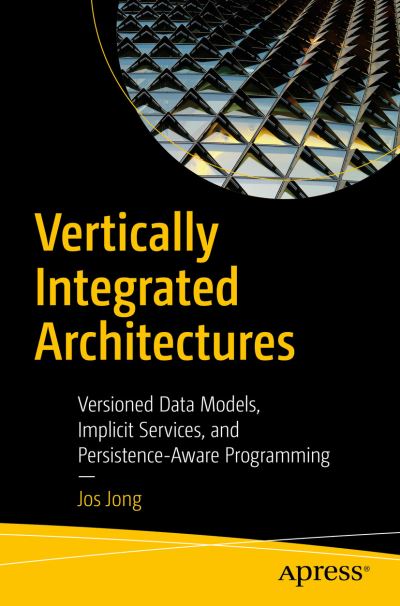
Understand how and why the separation between layers and tiers in service-oriented architectures holds software developers back from being truly productive, and how you can remedy that problem.
Strong processes and development tools can help developers write more complex software, but large amounts of code can still be directly deduced from the underlying database model, hampering developer productivity. In a world with a shortage of developers, this is bad news. More code also increases maintenance costs and the risk of bugs, meaning less time is spent improving the quality of systems.
You will learn that by making relationships first-class citizens within an item/relationship model, you can develop an extremely compact query language, inspired by natural language. You will also learn how this model can serve as both a database schema and an object model upon which to build business logic. Implicit services free you from writing code for standard read/write operations, while still supporting fine-grained authorization.
Vertically Integrated Architectures explains how functional schema mappings can solve database migrations and service versioning at the same time, and how all this can support any client, from free-format to fully vertically integrated types. Unleash the potential and use VIA to drastically increase developer productivity and quality.
What You'll Learn
Who This Book Is For
Software architects, senior software developers, computer science professionals and students, and the open source community.
| ISBN: | 9781484242513 |
| Publication date: | 19th December 2018 |
| Author: | Jos Jong |
| Publisher: | Apress |
| Format: | Paperback |
| Pagination: | 244 pages |
| Genres: |
Open source and other operating systems |
Understand how and why the separation between layers and tiers in service-oriented architectures holds software developers back from being truly productive, and how you can remedy that problem. Strong processes and development tools can help developers write more complex software, but large amounts of code can still be directly deduced from the underlying database model, hampering developer productivity. In a world with a shortage of developers, this is bad news.
Vertically Integrated Architectures features in the following genres: Open source and other operating systems
Paperback, Ebook. Not Available.
Vertically Integrated Architectures was written by Jos Jong and published by Apress
Vertically Integrated Architectures has 244 pages