

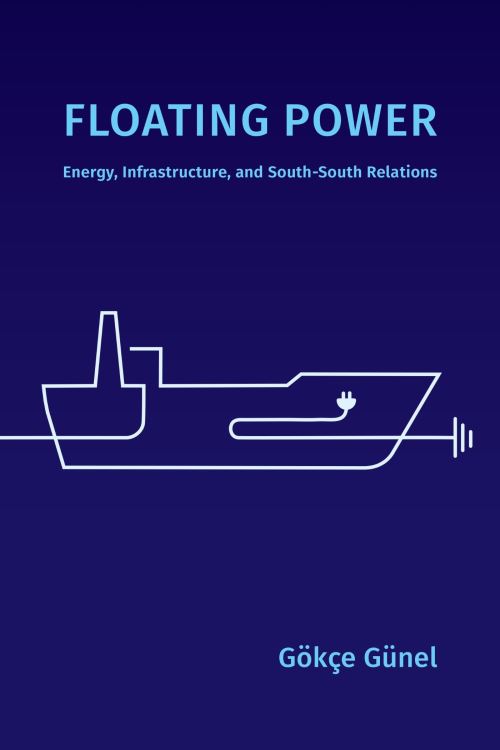
Floating Power considers the role of energy production on an international scale, challenging the idea that new infrastructures wholly replace older sources of energy. Shifting the discussion from energy transition to energy accumulation, Gökçe Günel engages with a range of electricity producers including hydroelectric, heavy fuel oil, natural gas, and solar power plants, noting their intersections as societies work to expand their supply at large rather than focus on one type of source.
Günel uses the Aysegül Sultan, a Turkish-built floating power plant in Ghana, as a prime example and vehicle to explore how state and corporate intervention impact energy technologies as every nation strives toward infrastructural expansion. Floating Power challenges the linear thinking and substitutive logic of mainstream energy discourse, instead showing how various power sources often expand and grow symbiotically.
| ISBN: | 9781478033615 |
| Publication date: | 21st April 2026 |
| Author: | Gökçe Günel |
| Publisher: | Duke University Press |
| Format: | Hardback |
| Pagination: | 194 pages |
| Series: | Experimental Futures |
| Genres: |
Social and cultural anthropology Central / national / federal government policies Energy resources Ethnic studies |
Floating Power considers the role of energy production on an international scale, challenging the idea that new infrastructures wholly replace older sources of energy. Shifting the discussion from energy transition to energy accumulation, Gökçe Günel engages with a range of electricity producers including hydroelectric, heavy fuel oil, natural gas, and solar power plants, noting their intersections as societies work to expand their supply at large rather than focus on one type of source.
Floating Power features in the following genres: Social and cultural anthropology, Central / national / federal government policies, Energy resources, Ethnic studies
Hardback, Paperback. Not Available.
Floating Power was written by Gökçe Günel and published by Duke University Press
Floating Power has 194 pages
Yes it is part of Experimental Futures series