

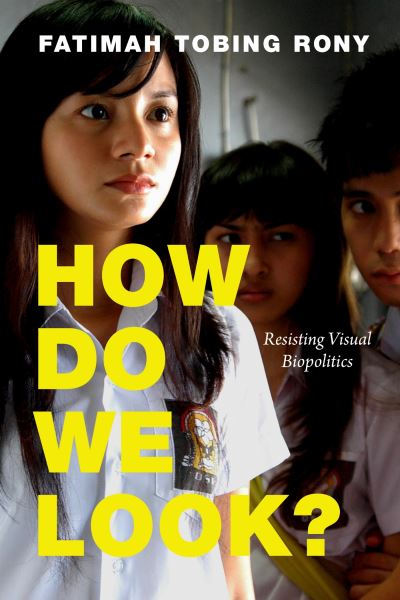
In How Do We Look? Fatimah Tobing Rony draws on transnational images of Indonesian women as a way to theorize what she calls visual biopolitics-the ways visual representation determines which lives are made to matter more than others. Rony outlines the mechanisms of visual biopolitics by examining Paul Gauguin's 1893 portrait of Annah la Javanaise-a trafficked thirteen-year-old girl found wandering the streets of Paris-as well as US ethnographic and documentary films.
In each instance, the figure of the Indonesian woman is inextricably tied to discourses of primitivism, savagery, colonialism, exoticism, and genocide. Rony also focuses on acts of resistance to visual biopolitics in film, writing, and photography. These works, such as Rachmi Diyah Larasati's The Dance that Makes You Vanish, Vincent Monnikendam's Mother Dao (1995), and the collaborative films of Nia Dinata, challenge the naturalized methods of seeing that justify exploitation, dehumanization, and early death of people of color.
By theorizing the mechanisms of visual biopolitics, Rony elucidates both its violence and its vulnerability.
| ISBN: | 9781478013679 |
| Publication date: | 25th January 2022 |
| Author: | Fatimah Tobing Rony |
| Publisher: | Duke University Press |
| Format: | Hardback |
| Pagination: | 248 pages |
| Series: | A Camera Obscura Book |
| Genres: |
Film history, theory or criticism Feminism and feminist theory |
In How Do We Look? Fatimah Tobing Rony draws on transnational images of Indonesian women as a way to theorize what she calls visual biopolitics-the ways visual representation determines which lives are made to matter more than others.
How Do We Look? features in the following genres: Film history, theory or criticism, Feminism and feminist theory
Paperback, Hardback. Not Available.
How Do We Look? was written by Fatimah Tobing Rony and published by Duke University Press
How Do We Look? has 248 pages
Yes it is part of A Camera Obscura Book series