

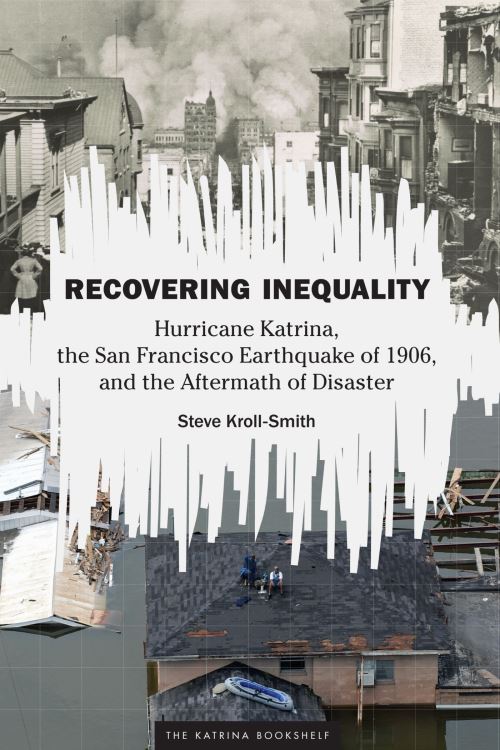
A lethal mix of natural disaster, dangerously flawed construction, and reckless human actions devastated San Francisco in 1906 and New Orleans in 2005. Eighty percent of the built environments of both cities were destroyed in the catastrophes, and the poor, the elderly, and the medically infirm were disproportionately among the thousands who perished. These striking similarities in the impacts of cataclysms separated by a century impelled Steve Kroll-Smith to look for commonalities in how the cities recovered from disaster. In Recovering Inequality, he builds a convincing case that disaster recovery and the reestablishment of social and economic inequality are inseparable.
Kroll-Smith demonstrates that disaster and recovery in New Orleans and San Francisco followed a similar pattern. In the immediate aftermath of the flooding and the firestorm, social boundaries were disordered and the communities came together in expressions of unity and support. But these were quickly replaced by other narratives and actions, including the depiction of the poor as looters, uneven access to disaster assistance, and successful efforts by the powerful to take valuable urban real estate from vulnerable people.
Kroll-Smith concludes that inexorable market forces ensured that recovery efforts in both cities would reestablish the patterns of inequality that existed before the catastrophes. The major difference he finds between the cities is that, from a market standpoint, New Orleans was expendable, while San Francisco rose from the ashes because it was a hub of commerce.
| ISBN: | 9781477316115 |
| Publication date: | 15th August 2018 |
| Author: | Steve KrollSmith |
| Publisher: | University of Texas Press |
| Format: | Paperback |
| Pagination: | 216 pages |
| Series: | The Katrina Bookshelf |
| Genres: |
Urban communities Social impact of disasters / accidents (natural or man-made) Sociology |
A lethal mix of natural disaster, dangerously flawed construction, and reckless human actions devastated San Francisco in 1906 and New Orleans in 2005. Eighty percent of the built environments of both cities were destroyed in the catastrophes, and the poor, the elderly, and the medically infirm were disproportionately among the thousands who perished.
Recovering Inequality features in the following genres: Urban communities, Social impact of disasters / accidents (natural or man-made), Sociology
Paperback. Not Available.
Recovering Inequality was written by Steve KrollSmith and published by University of Texas Press
Recovering Inequality has 216 pages
Yes it is part of The Katrina Bookshelf series