

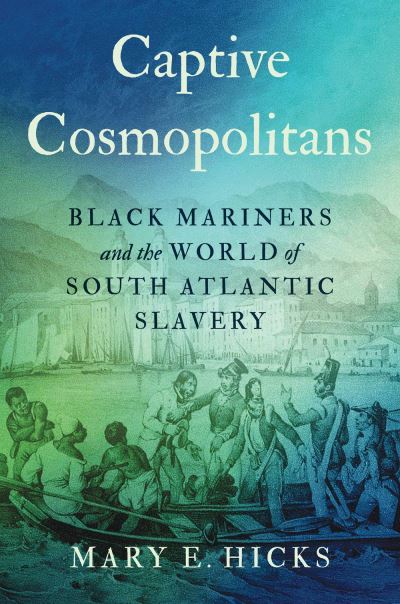
From the bustling ports of Lisbon to the coastal inlets of the Bight of Benin to the vibrant waterways of Bahia, Black mariners were integral to every space of the commercial South Atlantic. Navigating this kaleidoscopic world required a remarkable cosmopolitanism-the chameleonlike ability to adapt to new surroundings by developing sophisticated medicinal, linguistic, and navigational knowledge. Mary E. Hicks shows how Portuguese slaving ship captains harnessed and exploited this hybridity to expand their own traffic in human bondage. At the same time, she reveals how enslaved and free Black mariners capitalized on their shipboard positions and cosmopolitan expertise to participate in small-scale commodity trading on the very coasts where they themselves had been traded as commodities, reshaping societies and cultures on both sides of the Atlantic. Indeed, as Hicks argues, the Bahian slave trade was ruthlessly effective because its uniquely decentralized structure so effectively incorporated the desires and financial strategies of the very people enslaved by it. Yet taking advantage of such fraught economic opportunities ultimately enabled many enslaved Black mariners to purchase their freedom. And, in some cases, they became independent transatlantic slave traders themselves.
Hicks thus explores the central paradox that defined the lives of the captive cosmopolitans and, in doing so, reveals a new history of South Atlantic slavery centered on subaltern commercial and cultural exchange.
| ISBN: | 9781469671468 |
| Publication date: | 30th January 2025 |
| Author: | Mary E Hicks, Omohundro Institute of Early American History Culture |
| Publisher: | Omohundro Institute and UNC Press an imprint of The University of North Carolina Press |
| Format: | Hardback |
| Pagination: | 424 pages |
| Series: | Published by the Omohundro Institute of Early American History and Culture and the University of North Carolina Press |
| Genres: |
History of the Americas Ethnic studies Slavery and abolition of slavery |
From the bustling ports of Lisbon to the coastal inlets of the Bight of Benin to the vibrant waterways of Bahia, Black mariners were integral to every space of the commercial South Atlantic. Navigating this kaleidoscopic world required a remarkable cosmopolitanism-the chameleonlike ability to adapt to new surroundings by developing sophisticated medicinal, linguistic, and navigational knowledge. Mary E. Hicks shows how Portuguese slaving ship captains harnessed and exploited this hybridity to expand their own traffic in human bondage. At the same time, she reveals how enslaved and free Black mariners capitalized on their shipboard positions and cosmopolitan expertise to participate in small-scale commodity trading on the very coasts where they themselves had been traded as commodities, reshaping societies and cultures on both sides of the Atlantic. Indeed, as Hicks argues, the Bahian slave trade was ruthlessly effective because its uniquely decentralized structure so effectively incorporated the desires and financial strategies of the very people enslaved by it. Yet taking advantage of such fraught economic opportunities ultimately enabled many enslaved Black mariners to purchase their freedom. And, in some cases, they became independent transatlantic slave traders themselves.
Hicks thus explores the central paradox that defined the lives of the captive cosmopolitans and, in doing so, reveals a new history of South Atlantic slavery centered on subaltern commercial and cultural exchange.
Captive Cosmopolitans features in the following genres: History of the Americas, Ethnic studies, Slavery and abolition of slavery
Captive Cosmopolitans is available in Hardback
Captive Cosmopolitans was written by Mary E Hicks, Omohundro Institute of Early American History Culture and published by Omohundro Institute and UNC Press an imprint of The University of North Carolina Press
Captive Cosmopolitans has 424 pages