

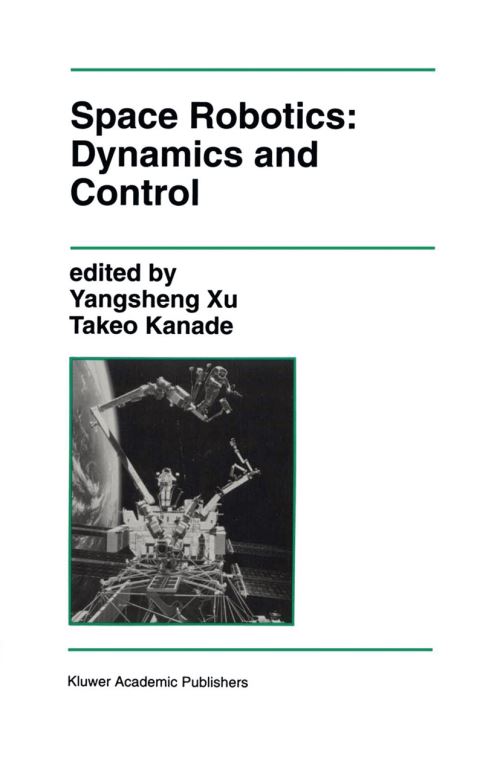
Robotic technology offers two potential benefits for future space exploration. One benefit is minimizing the risk that astronauts face. The other benefit is increasing their productivity.
Realizing the benefits of robotic technology in space will require solving several problems which are unique and now becoming active research topics.
One of the most important research areas is dynamics, control, motion and planning for space robots by considering the dynamic interaction between the robot and the base (space station, space shuttle, or satellite). Any inefficiency in the planning and control can considerably risk by success of the space mission.
Space Robotics: Dynamics and Control presents a collection of papers concerning fundamental problems in dynamics and control of space robots, focussing on issues relevant to dynamic base/robot interaction.
The authors are all pioneers in theoretical analysis and experimental systems development of space robot technology.
The chapters are organized within three problem areas: dynamics problems, nonholonomic nature problems, and control problems. This collection provides a solid reference for researchers in robotics, mechanics, control, and astronautical science.
| ISBN: | 9781461365952 |
| Publication date: | 27th September 2012 |
| Author: | Yangsheng Xu, Takeo Kanade |
| Publisher: | Springer an imprint of Springer US |
| Format: | Paperback |
| Pagination: | 285 pages |
| Series: | The Springer International Series in Engineering and Computer Science |
| Genres: |
Automatic control engineering Automotive technology and trades Electrical engineering Astronomy, space and time |
Robotic technology offers two potential benefits for future space exploration. One benefit is minimizing the risk that astronauts face.
Space Robotics features in the following genres: Automatic control engineering, Automotive technology and trades, Electrical engineering, Astronomy, space and time
Paperback, Hardback. Not Available.
Space Robotics was written by Yangsheng Xu, Takeo Kanade and published by Springer an imprint of Springer US
Space Robotics has 285 pages
Yes it is part of The Springer International Series in Engineering and Computer Science series