

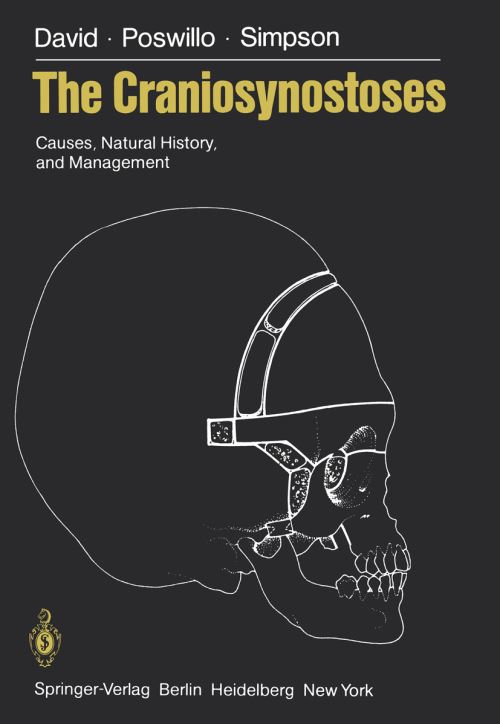
The human skull has many functions. The largest component of the skull, the neurocranium, protects and insulates the brain. It comprises the dome-shaped vault or calvaria, obviously a protective structure, and the more complex cranial base, which gives the vault a massive foundation and also houses the organs of hearing, balance, and smell.
The facial skeleton, or splanchnocranium, encloses the upper airway and the mouth. Chewing, the cQ-ordinated action ofthe jaws and teeth, is a function of the facial skeleton. The orbits, formed from both calvarial and facial bones, house the eyes and their accessory muscles.
The'skull also provides skeletal support for the muscles which affect speech and facial expression. It is largely by these that people communicate and display their emotions. Personality is judged on speech and on facial appearances, by conscious or subconscious aesthetic comparisons with cultural ideas-and prejudices.
So the shape of the skull has, or can have, profound emotional significance.
| ISBN: | 9781447113256 |
| Publication date: | 8th November 2011 |
| Author: | David J David, D Poswillo, D Simpson |
| Illustrator: | D Cain |
| Publisher: | Springer an imprint of Springer London |
| Format: | Paperback |
| Pagination: | 334 pages |
| Genres: |
Neurosurgery |
The human skull has many functions. The largest component of the skull, the neurocranium, protects and insulates the brain.
The Craniosynostoses features in the following genres: Neurosurgery
Paperback, Hardback. Not Available.
The Craniosynostoses was written by David J David, D Poswillo, D Simpson and published by Springer an imprint of Springer London
The Craniosynostoses has 334 pages