

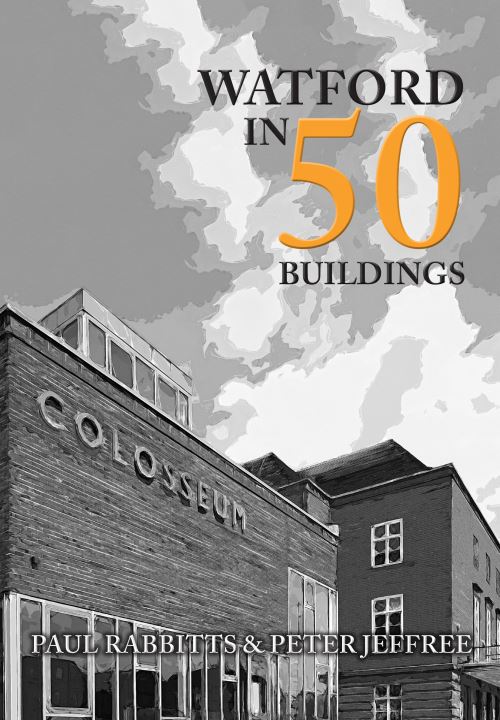
The town of Watford, in Hertfordshire, began as a settlement in the twelfth century when the Abbot of St Albans, who owned the land here, was given permission to hold a weekly market. He chose a site on a slight rise above the ford over the River Colne, along a route already used by travellers. The abbot also arranged for the first parish church - St Mary's - to be built adjacent to the market.
In the Domesday Book there is no mention of Watford. The area of the current town and the land around it belonged to the abbot's manor of Cashio (later Cassio) and it continued to be controlled by the abbot until the sixteenth century. A few buildings remain from this period.
Other gems are Monmouth House from the seventeeth century; the Free School, Frogmore House, Benskin House (now Watford Museum), Little Cassiobury and Russells from the eighteenth century; and some of the High Street shops. In this book Paul Rabbitts and Peter Jeffree highlight fifty buildings spanning the centuries that reveal Watford's rich architectural history and tell the story of the changing face of this Hertfordshire town.
| ISBN: | 9781445690124 |
| Publication date: | 15th September 2019 |
| Author: | Paul A Rabbitts, Peter Jeffree |
| Publisher: | Amberley Publishing |
| Format: | Paperback |
| Pagination: | 96 pages |
| Series: | In 50 Buildings |
| Genres: |
Architecture Local history |
The town of Watford, in Hertfordshire, began as a settlement in the twelfth century when the Abbot of St Albans, who owned the land here, was given permission to hold a weekly market. He chose a site on a slight rise above the ford over the River Colne, along a route already used by travellers.
Watford in 50 Buildings features in the following genres: Architecture, Local history
Paperback. Not Available.
Watford in 50 Buildings was written by Paul A Rabbitts, Peter Jeffree and published by Amberley Publishing
Watford in 50 Buildings has 96 pages
Yes it is part of In 50 Buildings series