

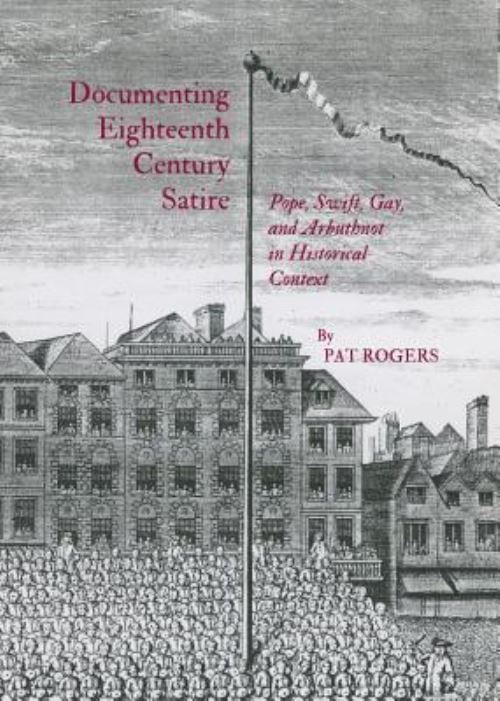
Documenting Eighteenth Century Satire provides a historicized view of Augustan satire, through detailed readings of individual works. It aims to show how these satires can be "documented" in various ways to reveal richer meanings. The book ranges across different modes of satire, in poetry, prose and drama. It covers some of the best known works of eighteenth-century British literature, including The Rape of the Lock, The Dunciad, and The Beggar's Opera. In addition it deals with less familiar but important texts, including Gay's Trivia, Pope's Epistle to Miss Blount, and Swift's poem on Sid Hamet, as well as works of great literary merit which have been unduly neglected, including Pope's Duke upon Duke and Swift's The Bubble. One essay offers the first full interpretation and edition of a poem that surfaced in the 1970s, still virtually unknown, written by Pope and/or Gay. Another describes a previously unsuspected hoax by the Scriblerians on the quest for the longitude, while one more finds an unsuspected, but close, link between poems by Pope and Pushkin. Sources are drawn from numerous unpublished documents (wills, private letters, inventories, estate deeds, marriage contracts and private correspondence). Extensive use is made of contemporary newspapers, magazines and pamphlets. Most of these have not been quarried heavily (if at all) before. Some essays are completely new while others have been extensively revised for this book.
| ISBN: | 9781443832113 |
| Publication date: | 1st January 2012 |
| Author: | Pat Rogers |
| Publisher: | Cambridge Scholars Publishing an imprint of Cambridge Scholars |
| Format: | Hardback |
| Pagination: | 310 pages |
| Genres: |
Literary studies: general European history Social and cultural history |
Documenting Eighteenth Century Satire provides a historicized view of Augustan satire, through detailed readings of individual works. It aims to show how these satires can be "documented" in various ways to reveal richer meanings.
Documenting Eighteenth Century Satire features in the following genres: Literary studies: general, European history, Social and cultural history
Hardback, Ebook. Not Available.
Documenting Eighteenth Century Satire was written by Pat Rogers and published by Cambridge Scholars Publishing an imprint of Cambridge Scholars
Documenting Eighteenth Century Satire has 310 pages