

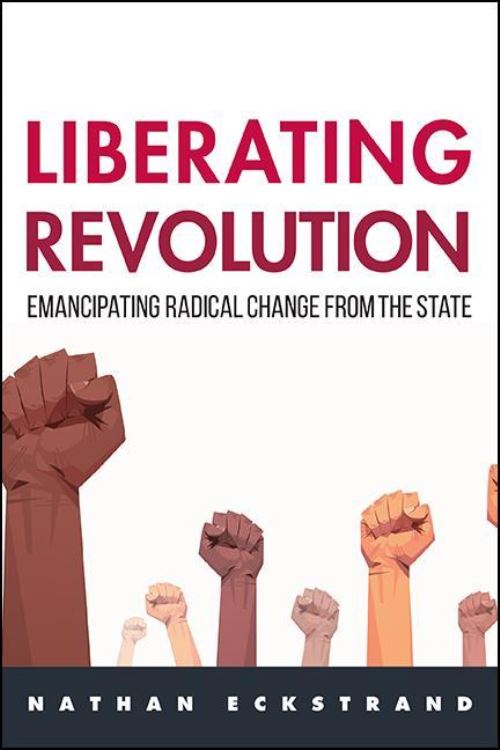
Provides a novel conceptual and practical theory of revolution, engaging previous theories of revolution, contemporary continental philosophy, and systems theory.
Liberating Revolution challenges the idea that we understand what revolution is. All current understandings of revolution are different ways of portraying the state. To liberate revolution, we must explain radical change without determining its course or limiting what it can do. Nathan Eckstrand reviews earlier theories of revolution from history-social contract theory, Marxism, Hegelianism, liberalism, communism, totalitarianism, and Machiavellism-and studies how they describe political change.
He then puts forth a new theory of change called Dynamic Anarchism, drawing on Event Ontology's discussions of radical change, systems theory's understanding of dynamic and adaptive systems, and anarchism's attempts to think of politics independent of the state. In its final chapter, Liberating Revolution advises how to produce radical change effectively.
A valuable contribution to the ongoing discussion of how best to understand change given discoveries both microscopic and global, this book offers useful ideas to students curious about why revolutions often fail to achieve their goals or to anyone learning how change is depicted in political theory.
| ISBN: | 9781438486765 |
| Publication date: | 2nd August 2022 |
| Author: | Nathan Eckstrand |
| Publisher: | SUNY Press an imprint of State University of New York Press |
| Format: | Paperback |
| Pagination: | 283 pages |
| Series: | SUNY Series in New Political Science |
| Genres: |
Political science and theory Political structures: democracy Industrial arbitration and negotiation Social and political philosophy Political control and freedoms Sociology Politics and government |
Provides a novel conceptual and practical theory of revolution, engaging previous theories of revolution, contemporary continental philosophy, and systems theory.Liberating Revolution challenges the idea that we understand what revolution is. All current understandings of revolution are different ways of portraying the state.
Liberating Revolution features in the following genres: Political science and theory, Political structures: democracy, Industrial arbitration and negotiation, Social and political philosophy, Political control and freedoms, Sociology, Politics and government
Paperback, Hardback, Ebook. £22.96, down from the £25.51 cover price. Not Available.
Liberating Revolution was written by Nathan Eckstrand and published by SUNY Press an imprint of State University of New York Press
Liberating Revolution has 283 pages
Yes it is part of SUNY Series in New Political Science series
£22.96, reduced from £25.51. Not Available.