

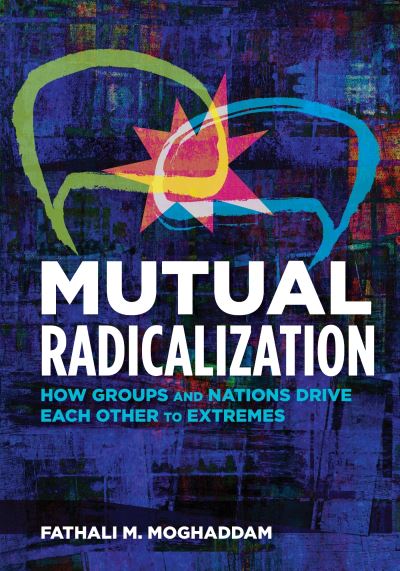
Author featured on the hit NetFlix series How to Become A Tyrant! Also by the author, Threat to Democracy: The Appeal of Authoritarianism in an Age of Uncertainty, a timely read for our current political environment, which was mentioned on NPR Marketplace Tech.
Radicalization has become a serious global problem. Groups and nations are increasingly embroiled in escalating conflicts with one another that are defined by pathological hatred and ideological polarization, with devastating consequences including terrorism and war. Social psychologist Fathali M. Moghaddam calls this process mutual radicalization. In this groundbreaking book, he explores its causes and potential solutions.
Drawing from well?established psychological principles, Moghaddam presents a dynamic, cyclical three?stage model of mutual radicalization that explains how groups gather under extremist ideologies, establish rigid norms under authoritarian leadership, and develop antagonistic worldviews that exaggerate the threats posed by each other.
This process leads to intensifying aggressive actions that can even reach the point of mutual destruction. Moghaddam applies his model to ten real?world case studies of mutual radicalization that focus on three main areas: the conflict between Islamist radicals and extreme nationalists in the West nations that are mired in longstanding hostilities, including North Korea and South Korea and the increasingly toxic atmosphere in American politics.
Moghaddam also offers practical solutions for achieving deradicalization and highlights historical successes, such as German reunification.
| ISBN: | 9781433829239 |
| Publication date: | 12th June 2018 |
| Author: | Fathali M Moghaddam |
| Publisher: | American Psychological Association |
| Format: | Paperback |
| Pagination: | 259 pages |
| Genres: |
Violence and abuse in society Social, group or collective psychology Political ideologies and movements |
Author featured on the hit NetFlix series How to Become A Tyrant! Also by the author, Threat to Democracy: The Appeal of Authoritarianism in an Age of Uncertainty, a timely read for our current political environment, which was mentioned on NPR Marketplace Tech. Radicalization has become a serious global problem.
Mutual Radicalization features in the following genres: Violence and abuse in society, Social, group or collective psychology, Political ideologies and movements
Paperback. £36.90, down from the £41.00 cover price. Not Available.
Mutual Radicalization was written by Fathali M Moghaddam and published by American Psychological Association
Mutual Radicalization has 259 pages
£36.90, reduced from £41.00. Not Available.