

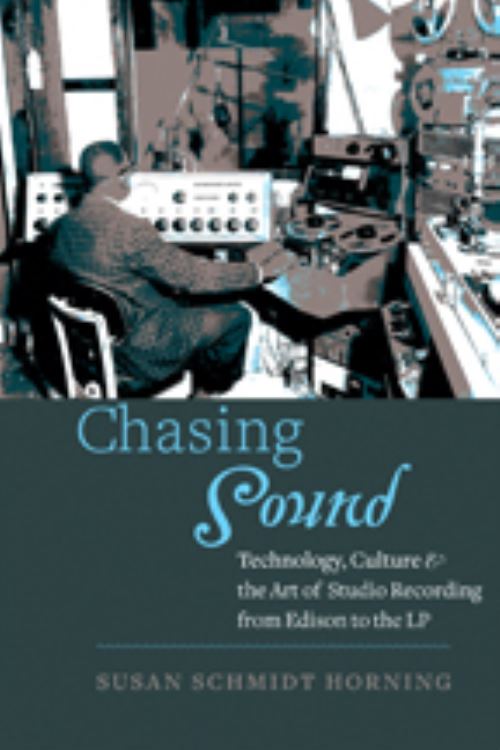
How technically enhanced studio recordings revolutionized music and the music industry.
In Chasing Sound, Susan Schmidt Horning traces the cultural and technological evolution of recording studios in the United States from the first practical devices to the modern multi-track studios of the analog era. Charting the technical development of studio equipment, the professionalization of recording engineers, and the growing collaboration between artists and technicians, she shows how the earliest efforts to capture the sound of live performances eventually resulted in a trend toward studio creations that extended beyond live shows, ultimately reversing the historic relationship between live and recorded sound.
Schmidt Horning draws from a wealth of original oral interviews with major labels and independent recording engineers, producers, arrangers, and musicians, as well as memoirs, technical journals, popular accounts, and sound recordings. Recording engineers and producers, she finds, influenced technological and musical change as they sought to improve the sound of records.
By investigating the complex relationship between sound engineering and popular music, she reveals the increasing reliance on technological intervention in the creation as well as in the reception of music. The recording studio, she argues, is at the center of musical culture in the twentieth century.
| ISBN: | 9781421418483 |
| Publication date: | 13th November 2015 |
| Author: | Susan Schmidt Horning |
| Publisher: | Johns Hopkins University Press |
| Format: | Paperback |
| Pagination: | 320 pages |
| Series: | Studies in Industry and Society |
| Genres: |
Music recording and reproduction History of engineering and technology Music reviews and criticism |
How technically enhanced studio recordings revolutionized music and the music industry.In Chasing Sound, Susan Schmidt Horning traces the cultural and technological evolution of recording studios in the United States from the first practical devices to the modern multi-track studios of the analog era. Charting the technical development of studio equipment, the professionalization of recording engineers, and the growing collaboration between artists and technicians, she shows how the earliest efforts to capture the sound of live performances eventually resulted in a trend toward studio creations that extended beyond live shows, ultimately reversing the historic relationship between live and recorded sound.
Chasing Sound features in the following genres: Music recording and reproduction, History of engineering and technology, Music reviews and criticism
Paperback, Ebook. Not Available.
Chasing Sound was written by Susan Schmidt Horning and published by Johns Hopkins University Press
Chasing Sound has 320 pages
Yes it is part of Studies in Industry and Society series