

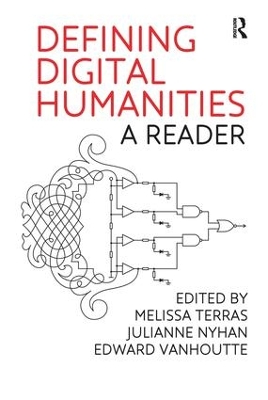
Digital Humanities is becoming an increasingly popular focus of academic endeavour. There are now hundreds of Digital Humanities centres worldwide and the subject is taught at both postgraduate and undergraduate level. Yet the term ’Digital Humanities’ is much debated.
This reader brings together, for the first time, in one core volume the essential readings that have emerged in Digital Humanities. We provide a historical overview of how the term ’Humanities Computing’ developed into the term ’Digital Humanities’, and highlight core readings which explore the meaning, scope, and implementation of the field. To contextualize and frame each included reading, the editors and authors provide a commentary on the original piece.
There is also an annotated bibliography of other material not included in the text to provide an essential list of reading in the discipline. This text will be required reading for scholars and students who want to discover the history of Digital Humanities through its core writings, and for those who wish to understand the many possibilities that exist when trying to define Digital Humanities.
| ISBN: | 9781409469629 |
| Publication date: | 23rd December 2013 |
| Author: | Melissa Terras |
| Publisher: | Routledge an imprint of Taylor & Francis Ltd |
| Format: | Hardback |
| Pagination: | 330 pages |
| Series: | Digital Research in the Arts and Humanities |
| Genres: |
Library, archive and information management Library and information sciences / Museology Literary studies: c 1900 to c 2000 History and Archaeology The arts: general topics Music |
Digital Humanities is becoming an increasingly popular focus of academic endeavour. There are now hundreds of Digital Humanities centres worldwide and the subject is taught at both postgraduate and undergraduate level.
Defining Digital Humanities features in the following genres: Library, archive and information management, Library and information sciences / Museology, Literary studies: c 1900 to c 2000, History and Archaeology, The arts: general topics, Music
Hardback. £154.79, down from the £171.99 cover price. Not Available.
Defining Digital Humanities was written by Melissa Terras and published by Routledge an imprint of Taylor & Francis Ltd
Defining Digital Humanities has 330 pages
Yes it is part of Digital Research in the Arts and Humanities series
£154.79, reduced from £171.99. Not Available.