

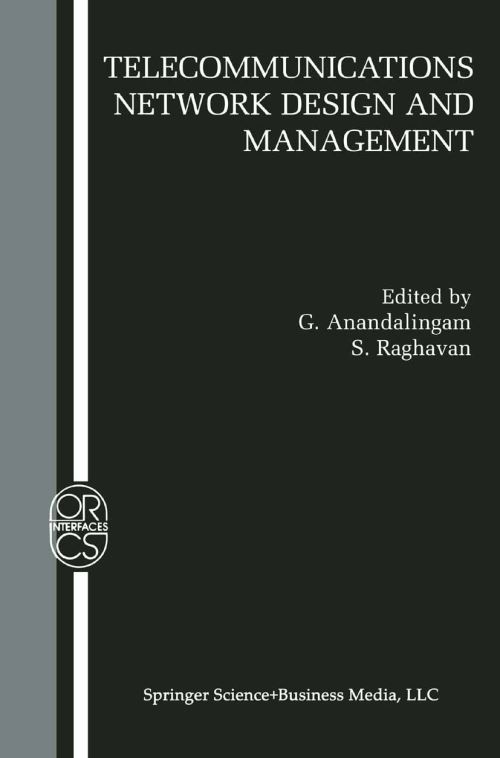
Telecommunications Network Design And Management represents the state-of-the-art of applying operations research techniques and solutions across a broad spectrum of telecommunications problems and implementation issues.
-The first three chapters of the book deal with the design of wireless networks, including UMTS and Ad-Hoc networks.
-Chapters 4-6 deal with the optimal design of telecommunications networks. Techniques used for network design range from genetic algorithms to combinatorial optimization heuristics.
-Chapters 7-10 analyze traffic flow in telecommunications networks, focusing on optimizing traffic load distribution and the scheduling of switches under multi-media streams and heavy traffic.
-Chapters 11-14 deal with telecommunications network management, examining bandwidth provisioning, admission control, queue management, dynamic routing, and feedback regulation in order to ensure that the network performance is optimized.
-Chapters 15-16 deal with the construction of topologies and allocation of bandwidth to ensure quality-of-service.
| ISBN: | 9781402073182 |
| Publication date: | 31st December 2002 |
| Author: | INFORMS Telecommunications Conference, G Anandalingam, S Raghavan, Institute for Operations Research and the Management Sciences |
| Publisher: | Springer an imprint of Springer US |
| Format: | Hardback |
| Pagination: | 340 pages |
| Series: | Operations Research/computer Science Interfaces Series |
| Genres: |
Business mathematics and systems Management decision making Network hardware Operational research Information technology: general topics Business applications Applied computing |
Telecommunications Network Design And Management represents the state-of-the-art of applying operations research techniques and solutions across a broad spectrum of telecommunications problems and implementation issues. -The first three chapters of the book deal with the design of wireless networks, including UMTS and Ad-Hoc networks. -Chapters 4-6 deal with the optimal design of telecommunications networks. Techniques used for network design range from genetic algorithms to combinatorial optimization heuristics. -Chapters 7-10 analyze traffic flow in telecommunications networks, focusing on optimizing traffic load distribution and the scheduling of switches under multi-media streams and heavy traffic. -Chapters 11-14 deal with telecommunications network management, examining bandwidth provisioning, admission control, queue management, dynamic routing, and feedback regulation in order to ensure that the network performance is optimized. -Chapters 15-16 deal with the construction of topologies and allocation of bandwidth to ensure quality-of-service.
Telecommunications Network Design and Management features in the following genres: Business mathematics and systems, Management decision making, Network hardware, Operational research, Information technology: general topics, Business applications, Applied computing
Hardback. Not Available.
Telecommunications Network Design and Management was written by INFORMS Telecommunications Conference, G Anandalingam, S Raghavan, Institute for Operations Research and the Management Sciences and published by Springer an imprint of Springer US
Telecommunications Network Design and Management has 340 pages
Yes it is part of Operations Research/computer Science Interfaces Series series