

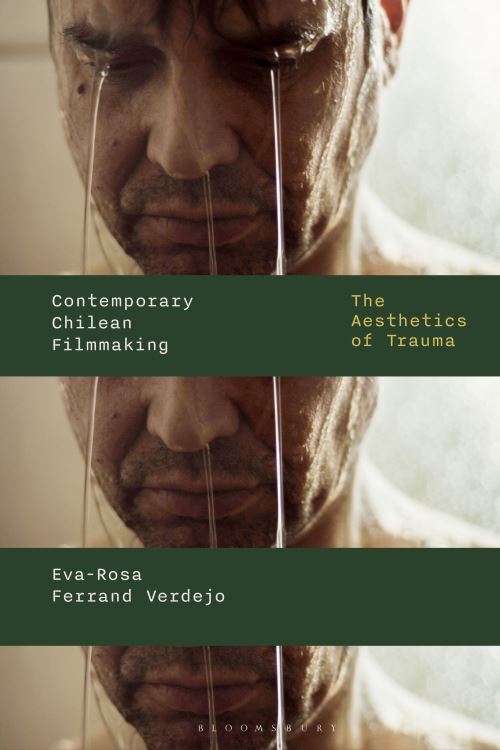
This book explores how the generation of filmmakers born in the aftermath of the Chilean dictatorship (1973-1990) use cinema to navigate and narrate the complex legacies of their country's turbulent past.
Eva-Rosa Ferrand Verdejo examines the work of the Novìsimo Cine Chileno, providing close readings of key films such as Fernando Guzzoni's Carne de Perro (2013),Cristóbal León and Joaquìn Cociña's La Casa Lobo (2018), Manuela Martelli's 1976 (2022), and Pablo Larraìn's El Conde (2023). She identifies a recurring trope of blurred boundaries within these films - whether between right and wrong, past and present, fiction and reality, or a blending of genre conventions, - which disorients the viewer and resists any singular understanding of the film. She argues that this disorientation pushes the audience into a more active and critical mode of spectatorship.
Drawing on psychoanalytical theory and political philosophy, she goes on to explore how the aesthetic choices within these films are reflective of an uneasy relationship to Chile's traumatic past. Labelling these the 'aesthetics of trauma', she argues that they challenge official histories and raise broader questions about memory, trauma, and ethical representation in post-dictatorial societies.
| ISBN: | 9781350528024 |
| Publication date: | 11th December 2025 |
| Author: | EvaRosa Ferrand Verdejo |
| Publisher: | Bloomsbury Academic an imprint of Bloomsbury Publishing (UK) |
| Format: | Hardback |
| Pagination: | 216 pages |
| Series: | World Cinema |
| Genres: |
Film history, theory or criticism Political structures: totalitarianism and dictatorship |
This book explores how the generation of filmmakers born in the aftermath of the Chilean dictatorship (1973-1990) use cinema to navigate and narrate the complex legacies of their country's turbulent past.Eva-Rosa Ferrand Verdejo examines the work of the Novìsimo Cine Chileno, providing close readings of key films such as Fernando Guzzoni's Carne de Perro (2013),Cristóbal León and Joaquìn Cociña's La Casa Lobo (2018), Manuela Martelli's 1976 (2022), and Pablo Larraìn's El Conde (2023). She identifies a recurring trope of blurred boundaries within these films - whether between right and wrong, past and present, fiction and reality, or a blending of genre conventions, - which disorients the viewer and resists any singular understanding of the film.
Contemporary Chilean Filmmaking features in the following genres: Film history, theory or criticism, Political structures: totalitarianism and dictatorship
Hardback. £76.50, down from the £85.00 cover price. Not Available.
Contemporary Chilean Filmmaking was written by EvaRosa Ferrand Verdejo and published by Bloomsbury Academic an imprint of Bloomsbury Publishing (UK)
Contemporary Chilean Filmmaking has 216 pages
Yes it is part of World Cinema series
£76.50, reduced from £85.00. Not Available.