

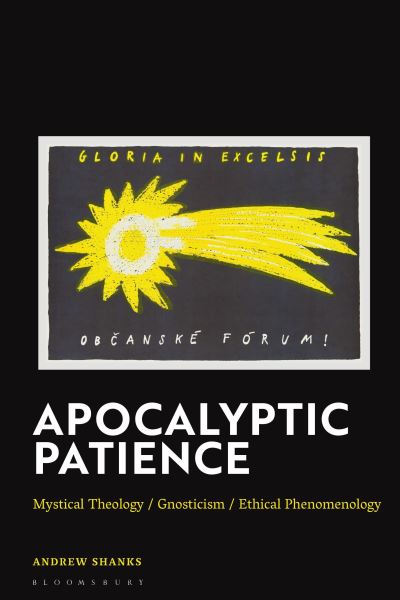
Andrew Shanks brings together a grand narrative of theology and continental philosophy to argue that the 'solidarity of the shaken' is the kingdom of God in secular dress.
Shanks engages with the philosophy of Jan Patocka; specifically, his Heretical Essays in the Philosophy of History, which culminate in the concept of the 'solidarity of the shaken'. Such solidarity is quite simply that which empowers the most radically thoughtful openness to others, embattled against even the most repressive closure; a solidarity without any other essential qualification.
Split into three distinct parts, Shanks begins by discussing Patocka's philosophico-centric grand narrative, and drawing wider reference to the pre-philosophic origins of Abrahamic religious tradition. This is followed by an exploration of mystical theology, Christian and Islamic; of its decay into 'mysticism', and its influence on Christian and Jewish gnostic traditions. The final third presents a discussion on ethical phenomenology. Analysing the proponents of a 'pathos of shakenness' such as Kierkegaard, Levinas, L¢gstrup, he juxtaposes 19th-century thinkers such as Arendt and Hegel with Heidegger and Strauss as he moves through the century, and eventually to the rise of secular public conscience movement.
| ISBN: | 9781350410664 |
| Publication date: | 19th February 2026 |
| Author: | Andrew Shanks |
| Publisher: | Bloomsbury Academic an imprint of Bloomsbury Publishing (UK) |
| Format: | Paperback |
| Pagination: | 272 pages |
| Genres: |
Philosophy and Religion Phenomenology and Existentialism Western philosophy from c 1800 |
Andrew Shanks brings together a grand narrative of theology and continental philosophy to argue that the 'solidarity of the shaken' is the kingdom of God in secular dress.Shanks engages with the philosophy of Jan Patocka; specifically, his Heretical Essays in the Philosophy of History, which culminate in the concept of the 'solidarity of the shaken'. Such solidarity is quite simply that which empowers the most radically thoughtful openness to others, embattled against even the most repressive closure; a solidarity without any other essential qualification.Split into three distinct parts, Shanks begins by discussing Patocka's philosophico-centric grand narrative, and drawing wider reference to the pre-philosophic origins of Abrahamic religious tradition.
Apocalyptic Patience features in the following genres: Philosophy and Religion, Phenomenology and Existentialism, Western philosophy from c 1800
Paperback, Hardback. £26.09, down from the £28.99 cover price. Not Available.
Apocalyptic Patience was written by Andrew Shanks and published by Bloomsbury Academic an imprint of Bloomsbury Publishing (UK)
Apocalyptic Patience has 272 pages
£26.09, reduced from £28.99. Not Available.