

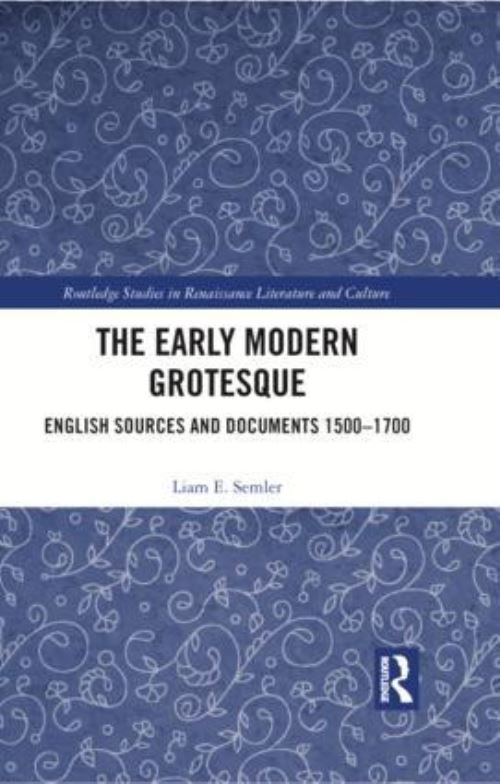
The Early Modern Grotesque: English Sources and Documents 1500-1700 offers readers a large and fully annotated collection of primary source texts addressing the grotesque in the English Renaissance. The sources are arranged chronologically in 120 numbered items with accompanying explanatory Notes. Each Note provides clarification of difficult terms in the source text, locating it in the context of early modern English and Continental discourses on the grotesque. The Notes also direct readers to further English sources and relevant modern scholarship. This volume includes a detailed introduction surveying the vocabulary, form and meaning of the grotesque from its arrival as a word, concept and aesthetic in 16th century England to its early maturity in the 18th century. The Introduction, Items and Notes, complemented by illustrations and a comprehensive bibliography, provide an unprecedented view of the evolving complexity and diversity of the early modern English grotesque.
While giving due credit to Wolfgang Kayser and Mikhail Bakhtin as masters of grotesque theory, this ground-breaking book aims to provoke new, evidence-based approaches to understanding the specifically English grotesque. The textual archive from 1500-1700 is a rich and intriguing record that offers much to interested readers and researchers in the fields of literary studies, theatre studies and art history.
| ISBN: | 9781138366589 |
| Publication date: | 6th November 2018 |
| Author: | L E Semler |
| Publisher: | Routledge an imprint of Taylor & Francis |
| Format: | Hardback |
| Pagination: | 300 pages |
| Series: | Routledge Studies in Renaissance Literature and Culture |
| Genres: |
Literary theory History of art Theatre studies |
The Early Modern Grotesque: English Sources and Documents 1500-1700 offers readers a large and fully annotated collection of primary source texts addressing the grotesque in the English Renaissance. The sources are arranged chronologically in 120 numbered items with accompanying explanatory Notes.
The Early Modern Grotesque features in the following genres: Literary theory, History of art, Theatre studies
Hardback. £154.79, down from the £171.99 cover price. Not Available.
The Early Modern Grotesque was written by L E Semler and published by Routledge an imprint of Taylor & Francis
The Early Modern Grotesque has 300 pages
Yes it is part of Routledge Studies in Renaissance Literature and Culture series
£154.79, reduced from £171.99. Not Available.