

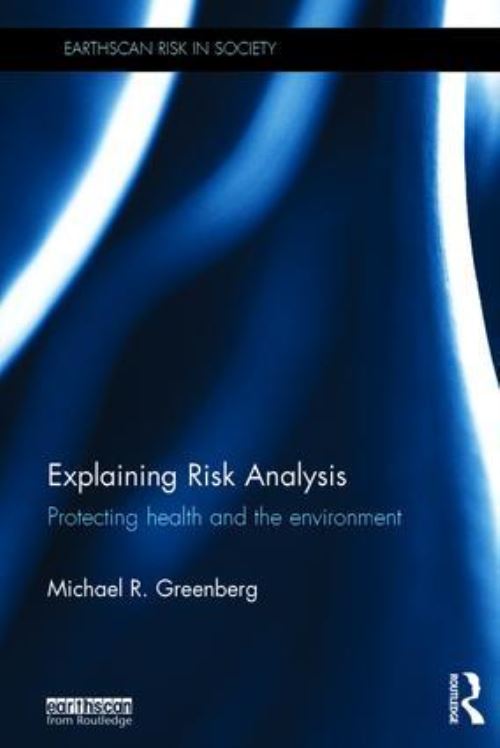
Risk analysis is not a narrowly defined set of applications. Rather, it is widely used to assess and manage a plethora of hazards that threaten dire implications. However, too few people actually understand what risk analysis can help us accomplish and, even among experts, knowledge is often limited to one or two applications.
Explaining Risk Analysis frames risk analysis as a holistic planning process aimed at making better risk-informed decisions and emphasizing the connections between the parts. This framework requires an understanding of basic terms, including explanations of why there is no universal agreement about what risk means, much less risk assessment, risk management and risk analysis.
Drawing on a wide range of case studies, the book illustrates the ways in which risk analysis can help lead to better decisions in a variety of scenarios, including the destruction of chemical weapons, management of nuclear waste and the response to passenger rail threats. The book demonstrates how the risk analysis process and the data, models and processes used in risk analysis will clarify, rather than obfuscate, decision-makers' options.
This book will be of great interest to students and scholars of risk assessment, risk management, public health, environmental science, environmental economics and environmental psychology.
| ISBN: | 9781138125339 |
| Publication date: | 20th September 2016 |
| Author: | Michael R Greenberg |
| Publisher: | Routledge an imprint of Taylor & Francis |
| Format: | Hardback |
| Pagination: | 320 pages |
| Series: | Earthscan Risk in Society Series |
| Genres: |
The environment Environmental economics Health, illness and addiction: social aspects Geophysics Sociology Business strategy Public health and preventive medicine Medical sociology Communication studies Psychology Earth sciences |
Risk analysis is not a narrowly defined set of applications. Rather, it is widely used to assess and manage a plethora of hazards that threaten dire implications.
Explaining Risk Analysis features in the following genres: The environment, Environmental economics, Health, illness and addiction: social aspects, Geophysics, Sociology, Business strategy, Public health and preventive medicine, Medical sociology, Communication studies, Psychology, Earth sciences
Hardback, Paperback, Ebook. £154.79, down from the £171.99 cover price. Not Available.
Explaining Risk Analysis was written by Michael R Greenberg and published by Routledge an imprint of Taylor & Francis
Explaining Risk Analysis has 320 pages
Yes it is part of Earthscan Risk in Society Series series
£154.79, reduced from £171.99. Not Available.